
Memoirs of a French Whore
1979
No user ratings available yet
Representation score: 4.5 out of 10
Representation Score
Good
1972
RDirector
Omiros Efstratiadis
Runtime
103 minutes
Average Rating
No ratings yetNew Showbiz Analysis
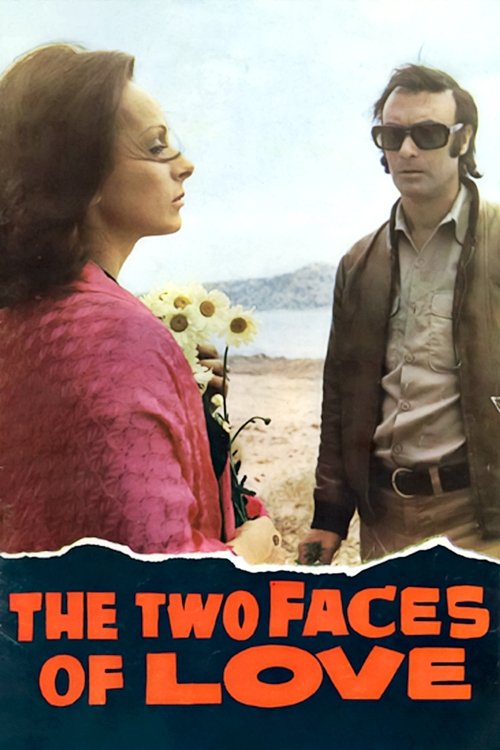
The Two Faces of Love serves as a realistic portrayal that challenges the moralistic frameworks of 1970s Greek cinema. It succeeds in subverting traditional gender roles by presenting a complex, flawed female protagonist rather than a domestic ideal. However, the film is limited by the demographic uniformity of its time and place. It lacks representation of LGBTQ+ identities and multi-ethnic casts, focusing instead on local class dynamics. Ultimately, the film's strength lies in its psychological depth and its willingness to deconstruct social order through its protagonist's descent into madness.
Category Breakdown
The film does not include any explicitly LGBTQ+ characters or explore non-straight relationships. The story revolves around a heterosexual couple, with one partner being a sex worker.
The story centers on a female protagonist who challenges traditional gender roles. By showing a woman dealing with sex work and psychological issues, it avoids the cliché of a perfect, stable woman.
As a 1972 Greek production, the film reflects the homogeneous demographics of its time. There is no indication of a diverse cast or characters representing different ethnicities.
The film critiques traditional social structures through moral relativism. It portrays marriage and stability as sources of psychological pressure, emphasizing subjective truth over conventional morality.
Mental health is explored through the protagonist's declining sanity. The focus on her internal experiences adds nuance, but it is unclear if she fully controls her fate.
Present on Screen
Limited or Absent
Official Synopsis
Eleana is a prostitute who appears to have been abused when she was younger. During her daily encounters with various clients, she meets a young labourer called Christos whom she momentarily tries to develop a normal relationship with. Old habits die hard and she soon hits the streets again but it's too late, Christos has become infatuated with Eleana and plans to marry her. Gradually, the pressure and stress of the situation starts to take it's toll on Eleana's sanity and leads to a surreal, nightmarish climax!
1979
1961

1986

1962
1976
1970

1980
1977
No reviews yet. Be the first to share your thoughts on this movie!
Use the rating form above to leave a star rating and optional review.