
Familie mit Hindernissen
2017
No user ratings available yet
Representation score: 3.5 out of 10
Representation Score
Fair
2017
Director
Viviane Andereggen
Runtime
90 minutes
Average Rating
No ratings yetNew Showbiz Analysis
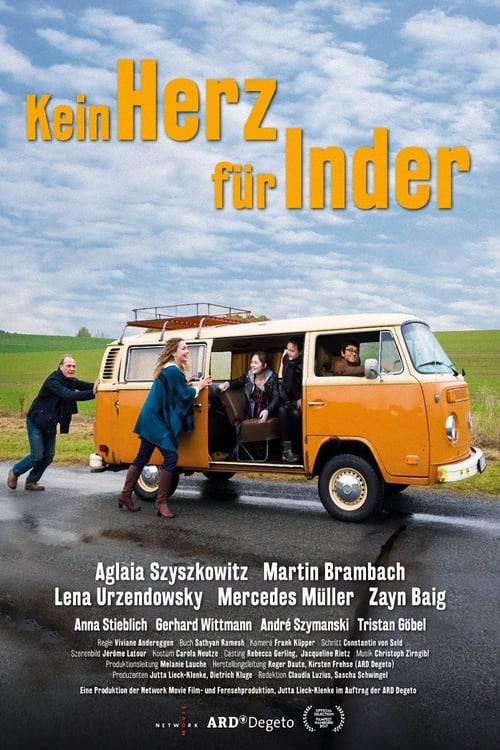
Kein Herz für Inder succeeds in breaking traditional European domestic narratives by focusing on a non-Western character. The conflict stems from the host family's initial discomfort with their Indian exchange student, allowing for a critique of insular, traditionalist attitudes. While the film excels in exploring racial and cultural themes, it lacks representation in other key areas. The narrative remains centered on the friction between the host family and the guest, limiting broader social diversity. Ultimately, the film challenges homogeneous storytelling by introducing an Indian boy, questioning the superficiality of Western perceptions of globalism.
Category Breakdown
The film does not include any explicit LGBTQ+ characters or narratives. The story focuses on the interactions between the host family and the exchange student.
Lena, an independent loner, serves as the central female protagonist. Despite her initial role being influenced by her parents' social engineering, she maintains a significant role in driving the story.
The narrative centers around an Indian boy, challenging Western stereotypes. This casting highlights the tension between homogeneous domestic life and global diversity.
The film examines the intersection of Western family structures and Hindu/Indian identities. It critiques the surface-level expectations of internationalism by emphasizing the reality of cultural differences.
There is no information indicating the presence of physical, neurodivergent, or mental health conditions in this work.
Present on Screen
Limited or Absent
Official Synopsis
Family Neufund is an exchange student from England in the house! The host parents Martin Brambach and Aglaia Szyszkowitz see this as a chance to finally win a girlfriend for their idiosyncratic 16-year-old daughter. But at the airport is not the expected "hip" Sandy McCartney from London in front of them, but a 13-year-old Indian boy! You want to get rid of the little Hindu as soon as possible. In a roundabout way, Zayn Baig in the role of the unwanted guest and Lena Urzendowsky as a loner are still pretty good friends.
2017
1967

2013
2011

2013

2014
2014
2016
No reviews yet. Be the first to share your thoughts on this movie!
Use the rating form above to leave a star rating and optional review.