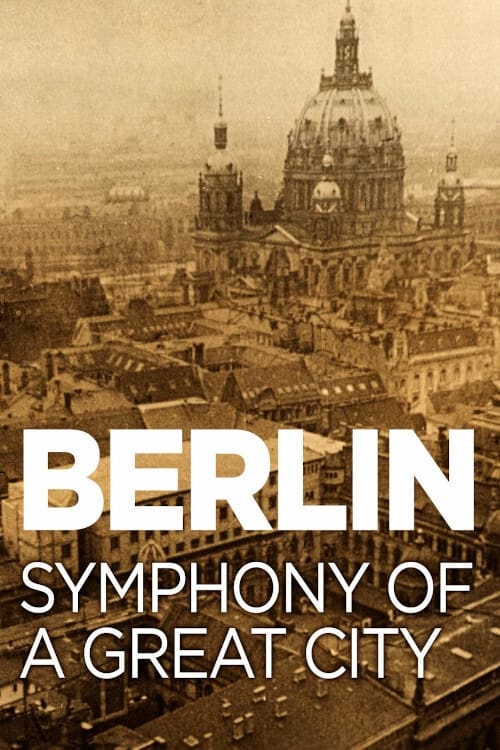
Berlin: Symphony of a Great City
1927
No user ratings available yet
Diversity score: 3.1 out of 10

1929
Director
Walter Ruttmann
Runtime
49 minutes
Average Rating
No ratings yetSynopsis
An impression of the state of the world in 1929, contrasting similarities and differences in religion, customs, art and entertainment from all over the world. The film is constructed like a symphony.
Overall Score
Limited
Category Breakdown
LGBTQ+ Representation
The film lacks any discernible focus on queer identities or subtext. It captures the general populace of the Weimar era without centering specific LGBTQ+ lived experiences.
Gender Representation
Women appear in both domestic and professional roles within the urban landscape. However, the observational style lacks the character-driven conflict needed to evaluate gender hierarchy subversion.
Racial & Ethnic Diversity
The footage reflects the Eurocentric and colonial photographic standards of 1929. Non-Western subjects appear as part of an ethnographic tapestry rather than through high-agency portrayals.
Religious & Cultural Diversity
The film prioritizes a secular, modernist worldview by emphasizing machines and industry. This focus de-emphasizes traditionalist or agrarian social orders in favor of the industrial present.
Disability Representation
There is no intentional representation of neurodivergence or physical disability. The montage focuses on the kinetic energy of able-bodied masses and mechanical precision.
Strengths
Areas for Improvement
AI Analysis
Walter Ruttmann’s experimental documentary functions as a rhythmic, non-verbal impression of global modernity. By utilizing a symphonic montage, the film prioritizes aesthetic movement and sensory textures over individual character arcs or social commentary. While the work successfully disrupts traditional storytelling by removing the hero archetype, its reliance on observational montage limits its capacity for intersectional representation. The film acts more as a historical mirror of the 1929 visual landscape than a tool for systemic deconstruction. Ultimately, the film captures the era's urban collective through a lens that reflects contemporary colonial and Eurocentric perspectives, offering a glimpse of the world as perceived through a modernist, industrial filter.
1927
1963
1963

1956
1947

2019
2002

1930

1900
1997
1948
1936
No reviews yet. Be the first to share your thoughts on this movie!
Use the rating form above to leave a star rating and optional review.