
There Was an Old Couple
1965
No user ratings available yet
Representation score: 1.4 out of 10
Representation Score
Good
2004
Director
Lidiya Bobrova
Runtime
97 minutes
Average Rating
No ratings yetNew Showbiz Analysis
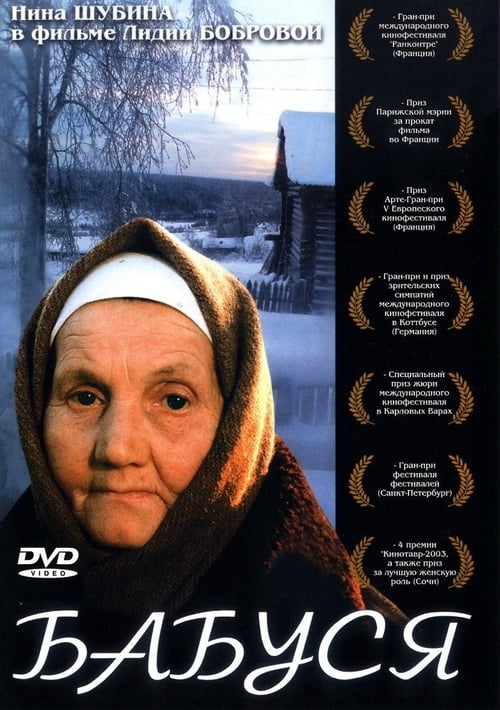
Grandma (2004) is a poignant social critique of post-Soviet Russia, focusing on the friction between historical memory and modern individualism. The film succeeds in deconstructing the traditional family unit, using the protagonist's displacement to highlight the human cost of rapid societal shifts. However, the film lacks demographic breadth. It offers little in the way of LGBTQ+ or multi-ethnic representation, remaining rooted in a singular, homogeneous cultural landscape. While the matriarch is a strong figure, the narrative risks framing her through the lens of elderly vulnerability. Ultimately, the film's value lies in its interrogation of how contemporary structures treat historical survivors, even if it lacks diverse multi-layered identities.
Category Breakdown
The film does not include any explicit LGBTQ+ characters or themes. The narrative focuses on generational and familial conflicts, leaving non-straight identities unexplored.
A matriarchal veteran of the Battle of Stalingrad provides significant historical influence. However, the tension arises from viewing her as a burden, which leans into clichés of elderly female vulnerability.
Set within a specific Russian context, the film depicts a homogeneous ethnic landscape. It focuses on internal cultural shifts rather than multi-ethnic or diverse dynamics.
The story critiques modern capitalism and the 'new' Russia. It challenges consumerist stability by portraying a dysfunctional family unit that prioritizes individual convenience over ancestral respect.
No specific neurodivergent or physical disabilities are mentioned. The protagonist's age-related displacement and vulnerability are central, though there is a risk of using age as a mere narrative device.
Present on Screen
Limited or Absent
Official Synopsis
An old Russian grandmother or "babushka", who took part in the Battle of Stalingrad, sacrificed everything for her children and even sold her house to get money for her grandchildren, is shuttled among those very grandchildren--products of the "new" Russia--none of whom want her to stay with them since she's too much of a "burden" for them.
1965

1983
1999
1949
2003

2007
2016
2007
No reviews yet. Be the first to share your thoughts on this movie!
Use the rating form above to leave a star rating and optional review.