Happiness C.O.D.
1935
No user ratings available yet
Representation score: 0.8 out of 10
Representation Score
Minimal
1937
ApprovedDirector
Glenn Tryon
Runtime
63 minutes
Average Rating
No ratings yetNew Showbiz Analysis
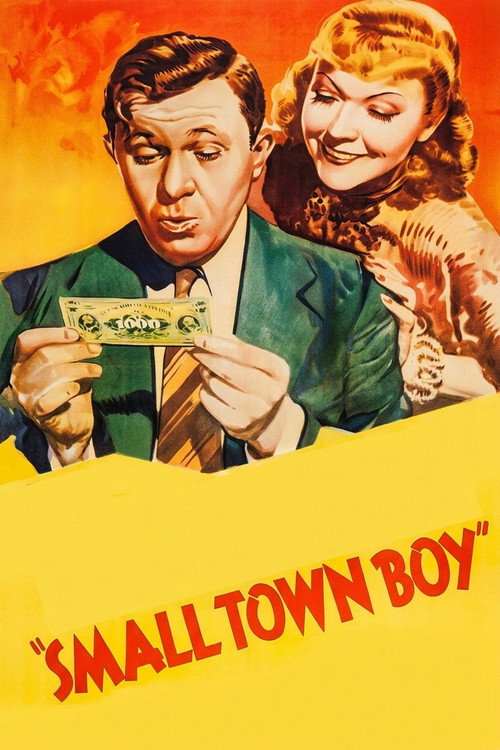
Small Town Boy is a product of its era, functioning as a traditional moral fable. The narrative adheres to established social hierarchies and reinforces conventional notions of family and gender roles. It prioritizes individual moral choices and economic morality over any systemic critique. Because the film centers on a singular demographic norm, it lacks meaningful representation of diverse identities. The plot is driven by masculine competence and the pursuit of traditional milestones like marriage and homeownership.
Category Breakdown
The film focuses solely on a heterosexual relationship between Henry and Molly. It does not depict any non-binary or non-cisgender identities and does not critique traditional romantic structures.
Gender roles are strictly traditional, emphasizing Henry's professional role and financial struggles. Molly primarily benefits from his success and does not have an independent role.
The narrative depicts a homogeneous social environment. There is no indication of a diverse cast or inclusion of non-Anglo-Saxon characters within the story.
The story promotes conventional Western values such as honesty and the sanctity of the nuclear family. It reinforces traditional capitalist and familial structures through its moral arc.
The film provides no evidence of characters with physical or neurodivergent disabilities.
Present on Screen
Limited or Absent
Official Synopsis
Henry Armstrong was past being a spring chicken, still believes in Santa Claus and the maxim that "honesty is the best policy", but lack of money keeps him from marrying Molly and buying a little home, and his is threatened with the loss of the petty job he has had for four years with old Curtis French, Molly's uncle, because he can not sell enough insurance policies. And, then, he finds a thousand dollar bill. His honesty makes him advertise the find, but no one claims the money. When he is convinced that the owner will not turn up and that the money is his to keep, he becomes a changed, more aggressive and self-confident person. He begins to make sales as fast as he can make the pitch and he insists that he and Molly be married at once. While getting dressed for the ceremony, he places the $1000 bill in one of his father's old suits, and Pa Armstrong, trying to raise money to buy his son a wedding present, sells the suit to a passing junk man.
1935
1936
1928
1940
1928
1949
1937
1937
No reviews yet. Be the first to share your thoughts on this movie!
Use the rating form above to leave a star rating and optional review.