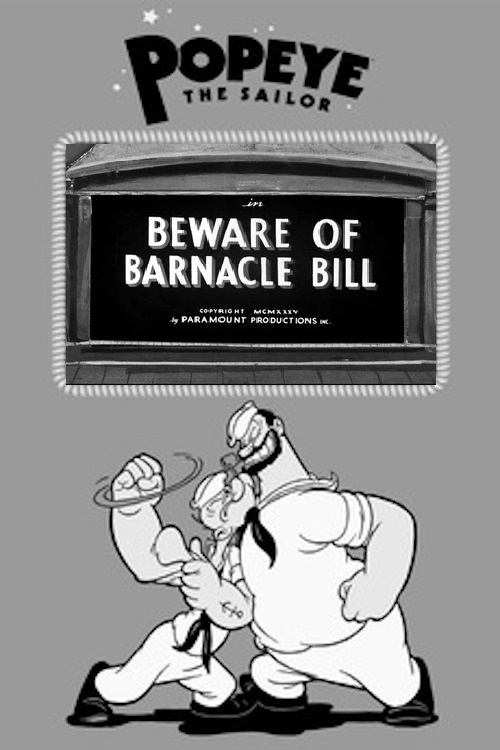
Beware of Barnacle Bill
1935
No user ratings available yet
Diversity score: 2.6 out of 10

1935
ApprovedDirector
Dave Fleischer
Runtime
7 minutes
Average Rating
No ratings yetSynopsis
Popeye's failures in the kitchen send him on a quest for a wife. He visits the "matrimonial agency" and picks Olive at the same time Bluto picks her. Of course, the boys settle their problem with their fists. Soon, Bluto and Olive are visiting Justice of the Peace Wimpy, with Popeye temporarily detained.
Overall Score
Limited
Category Breakdown
LGBTQ+ Representation
The story follows a strictly heteronormative framework. The central conflict revolves around two men competing for a woman, reinforcing traditional romantic tropes of the era.
Gender Representation
Gender hierarchies are traditional, with Olive Oyl serving as a passive object of desire. Masculine strength remains the primary method for resolving all conflicts.
Racial & Ethnic Diversity
The cast reflects a homogeneous group of standard character archetypes from the 1930s. There is no indication of racial blending or ethnic diversity in this narrative.
Religious & Cultural Diversity
The film reinforces Western social institutions like marriage and the legal system. It emphasizes domestic stability and traditional views of courtship and social order.
Disability Representation
The film provides no evidence regarding the portrayal of physical or neurodivergent disabilities.
Strengths
Areas for Improvement
AI Analysis
This 1935 animation is a quintessential product of its time, leaning heavily into the comedic tropes of the early sound era. The narrative is driven by a competition between male leads for a female character, which anchors the film in very traditional social structures. While the slapstick humor provides energy, the film lacks any intentional subversion of the era's norms. It functions as a standard representation of 1930s social hierarchies, focusing on domesticity and conventional romantic pursuits. Ultimately, the work lacks intersectional complexity. It relies on established archetypes that reinforce the status quo rather than challenging or expanding the representation of different identities.
1935
1937
1935
1940
1942

1936

1936
1933
1939
1937
1935
1939
No reviews yet. Be the first to share your thoughts on this movie!
Use the rating form above to leave a star rating and optional review.