
Frontier Marshal
1939
No user ratings available yet
Representation score: 0.3 out of 10
Representation Score
Minimal
1942
NRDirector
William C. McGann
Runtime
79 minutes
Average Rating
No ratings yetNew Showbiz Analysis
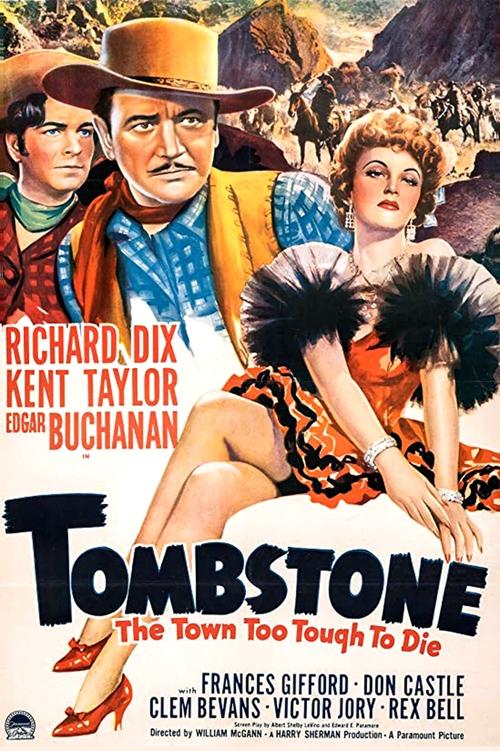
Tombstone: The Town Too Tough to Die is a quintessential product of its era, functioning to uphold rather than challenge established social hierarchies. The film prioritizes masculine ability to act and the preservation of conventional social orders through traditional Western archetypes. The narrative is built around a predominantly white social order and a strictly straight-centered framework. It lacks any meaningful engagement with neurodivergence, physical impairment, or diverse ethnic perspectives, adhering to the standard industry practices of the 1940s.
Category Breakdown
The film operates within a framework that assumes everyone is straight or cisgender. There are no depictions of queer identity or same-sex intimacy.
Narrative ability to act is almost exclusively centered on men and masculine codes of honor. Female characters occupy secondary roles as romantic interests or domestic anchors.
The cast is overwhelmingly homogeneous, reflecting 1940s cinematic conventions. There is a lack of characters of color with significant narrative ability to act.
The story emphasizes traditional Western values and the necessity of law and order. It reinforces the legitimacy of institutional authority and civilizing influences.
No visible or invisible disabilities are portrayed within the central character arcs. Characters are defined by physical capabilities suited to the Western genre.
Present on Screen
Limited or Absent
Official Synopsis
Uneven version of Wyatt Earp vs. the Clanton Gang with a little romance thrown in haphazardly.
1939
1967
1942
1939
1954
1940
1924

1957
No reviews yet. Be the first to share your thoughts on this movie!
Use the rating form above to leave a star rating and optional review.