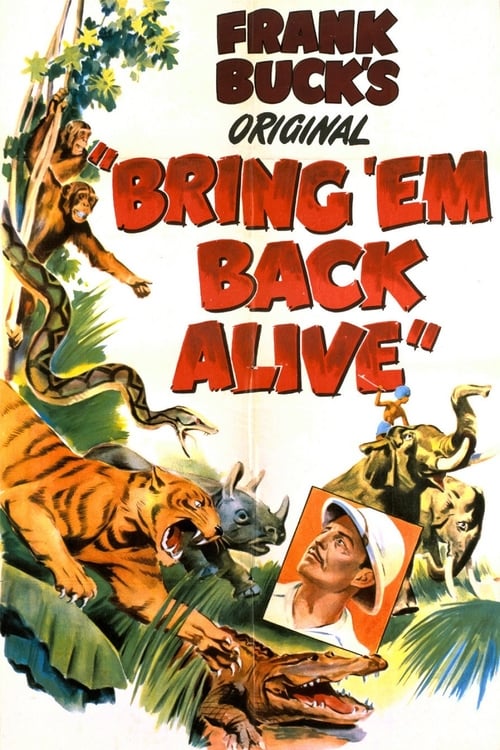
Bring 'Em Back Alive
1932
No user ratings available yet
Representation score: 0.3 out of 10
No Poster Available
Representation Score
Limited
1933
PassedDirector
Ward Wing
Runtime
59 minutes
Average Rating
No ratings yetNew Showbiz Analysis
Samarang is a product of 1930s adventure cinema, adhering to the colonialist frameworks common to its era. While it moves away from purely Western settings, it does so through a lens of exoticism. The film relies heavily on traditional gender hierarchies and racial stereotypes. The protagonist's journey is defined by masculine pursuits, while the cultural landscape is framed as a series of primitive obstacles to overcome. Ultimately, the production lacks intentional challenges to historical biases and conventional binary relationships.
Category Breakdown
The film follows a traditional heterosexual romantic arc between Ahmang and Sai-Yu. No queer subtext or non-binary gender identities are present in the narrative.
Sai-Yu serves as a central figure, but her role is largely defined by her status and romantic ties. Ahmang drives the plot through masculine pursuits of wealth and revenge.
The setting features characters from the Indian Ocean region. However, the story relies on clichés like 'bloodthirsty cannibals,' which may reinforce colonialist perceptions of indigenous people.
The narrative views non-Western spaces through a lens of exoticism. The 'Forbidden Lagoon' is presented as a site of primitive danger rather than a nuanced cultural setting.
There is no visible or invisible disability portrayed with real power. The focus remains strictly on physical survival and combat.
Present on Screen
Limited or Absent
Official Synopsis
A pseudo-documentary, “Samarang” tells the story of lowly Ahmang (Captain A.V. Cockle) and his socially superior love, Sai-Yu (Theresa Seth). Both live in the village of Samarang in the Indian Ocean. Because Sai-Yu is the daughter of a chief and Ahmang is but a poor fisherman, he needs to increase his wealth before asking for her hand. Thus he accepts the perilous offer of the wily Chang-Fu, who seeks pearl divers. Ahmang must brave the treacherous waters of the Forbidden Lagoon of Sakai, home to bloodthirsty cannibals, killer sharks, and a monstrous grasping octopus. Sai-Yu and Ahmang’s younger brother Ko-Hai come along for kicks, too. Ahmang finds his pearl, but he and Sai-Yu are stranded on the island, where they befriend a local orangutan. When they return to the boat, a shark kills Ko-Hai, and Ahmang must get revenge.
1932
1932
1979
1931
1935
1939
1936

1954
No reviews yet. Be the first to share your thoughts on this movie!
Use the rating form above to leave a star rating and optional review.