
Playing the Ponies
1937
No user ratings available yet
Representation score: 2.4 out of 10
Representation Score
Limited
1943
ApprovedDirector
Erle C. Kenton
Runtime
80 minutes
Average Rating
No ratings yetNew Showbiz Analysis
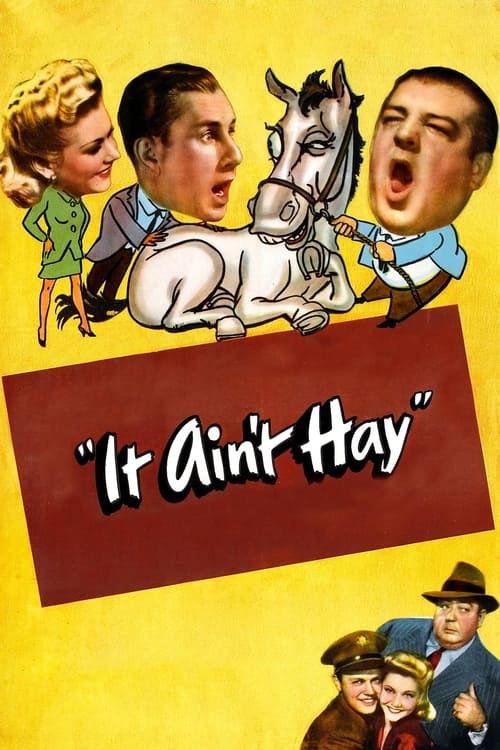
It Ain't Hay is a quintessential product of the 1940s studio system, prioritizing broad physical comedy over social depth. The narrative is driven almost entirely by the male leads, Abbott and Costello, leaving little room for diverse perspectives or autonomous female characters. The film operates within a very narrow cultural lens, reflecting the era's standard of white-centric casting and straight-centered structures. It lacks any meaningful representation of LGBTQ+ identities or significant racial diversity. While the slapstick nature of the comedy relies on physical clumsiness, it avoids explicit mockery of disabilities. Ultimately, the film serves as a conventional comedy that reinforces established social hierarchies rather than challenging them.
Category Breakdown
The film does not include any LGBTQ+ characters or stories. It follows the strict heterosexual norms typical of 1940s studio comedies.
The story focuses on the male comedic duo of Abbott and Costello. Although a woman starts the plot, the main roles remain with the male protagonists.
The production reflects the homogeneous casting practices of the early 1940s. It portrays white, Anglo-Saxon characters as the default without showing diverse backgrounds.
The narrative functions as a traditional situational comedy. It upholds conventional social order through physical humor without critiquing Western institutions or social norms.
The film relies heavily on slapstick and physical clumsiness for comedy. However, there is no specific evidence of using disability as a derogatory plot device.
Present on Screen
Limited or Absent
Official Synopsis
Abbot and Costello must find a replacement for a woman's horse they accidentally killed after feeding it some candy. They head for the racetrack, find a look-a-like and take it. They do not realize that the nag is "Tea Biscuit," a champion racehorse.
1937
1937
1942

1945
1951
1939

1943
1952
No reviews yet. Be the first to share your thoughts on this movie!
Use the rating form above to leave a star rating and optional review.