
Asian School Girls
2014
No user ratings available yet
Representation score: 6.3 out of 10
Representation Score
Fair
2003
NRDirector
Kenta Fukasaku, Kinji Fukasaku
Runtime
155 minutes
Average Rating
No ratings yetNew Showbiz Analysis
The film excels at critiquing systemic social issues, challenging the legitimacy of state-sanctioned morality and institutional authority. Its narrative structure dismantles oppressive systems through radical anti-authoritarianism. However, the film lacks visible representation of multi-layered identities. There is no clear evidence of LGBTQ+ characters, racial diversity beyond the Japanese setting, or characters with specific disabilities. Ultimately, the film's progressive themes come from its deconstruction of power dynamics rather than a diverse cast of characters.
Category Breakdown
The film centers on survival mechanics and geopolitical conflict but does not include any explicit LGBTQ+ characters or non-cisgender identities.
The linked collar mechanic shifts power dynamics, requiring cooperation instead of traditional masculine dominance. However, specific gender subversion remains unconfirmed.
Set in a Japanese socio-political context, the film adheres to era-specific demographic norms. While the protagonist has international reach, there is no evidence of a diverse cast.
The film offers a radical critique of state power and institutional corruption, portraying the government as an unethical entity conducting experiments on youth.
The survival game imposes extreme physical and psychological constraints on participants. However, there is no specific evidence of characters with established disabilities.
Present on Screen
Limited or Absent
Official Synopsis
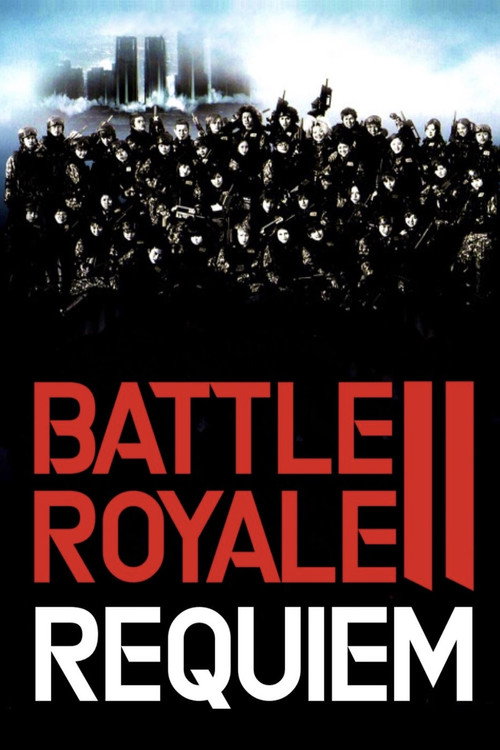
It's three years after the events of the original Battle Royale, and Shuya Nanahara is now an internationally-known terrorist determined to bring down the government. His terrorist group, Wild Seven, stages an attack that levels several buildings in Tokyo on Christmas Day, killing 8000 people. In order for the government to study the benefits of "teamwork", the new students work in pairs, with their collars electronically linked so that if one of them is killed, the other dies as well. They must kill Nanahara in three days - or die.
2014
1998

2002
2003
2000

2001

2023
2000
No reviews yet. Be the first to share your thoughts on this movie!
Use the rating form above to leave a star rating and optional review.