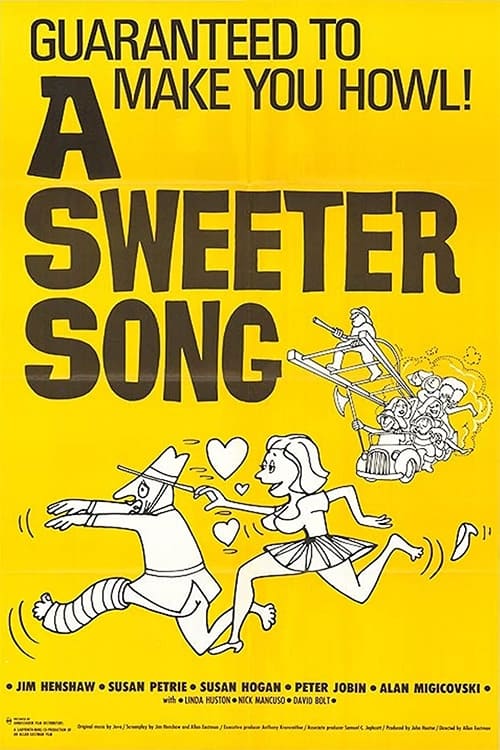
A Sweeter Song
1976
No user ratings available yet
Diversity score: 3.4 out of 10

1980
Director
Stepan Puchinyan
Runtime
92 minutes
Average Rating
No ratings yetSynopsis
The hero, a tall, blond, handsome man with a sense of humour, a labour leader, and an athlete, grew up in a family of metallurgists. After meeting a silly girl under very unusual circumstances, he fell in love with her. He quickly brought her home to his parents and explained that they were “forever together.” However, she was not yet divorced, and in many ways, she did not satisfy his father.
Overall Score
Limited
Category Breakdown
LGBTQ+ Representation
The plot centers on traditional romantic pursuits and existing matrimonial structures. There is no evidence of non-cisnormative identities or critiques of heteronormativity.
Gender Representation
The film presents a skewed power dynamic favoring the male protagonist. He is framed through archetypes of strength, while the female lead is described with diminishing language.
Racial & Ethnic Diversity
The setting depicts a homogeneous social environment focused on a specific professional class. No racial or ethnic blending is indicated within the narrative.
Religious & Cultural Diversity
Conflict arises from the tension between individual desire and rigid familial institutions. The story explores how a non-conforming partner fits into established social structures.
Disability Representation
The narrative contains no mention of characters navigating physical or neurodivergent disabilities.
Strengths
Areas for Improvement
AI Analysis
The film adheres to traditional mid-20th-century dramatic structures, focusing on conventional romantic tropes. It functions primarily as a character study regarding domestic integration and social hierarchies rather than a vehicle for progressive social critique. Characterization leans heavily on established archetypes. The male lead is defined by his physical prowess and leadership, while the female lead's agency is limited by the language used to describe her. The social environment appears homogeneous, lacking any significant racial, ethnic, or LGBTQ+ diversity. The narrative tension is derived from interpersonal and familial friction rather than intersectional representation.
1976

2009

1987
1984

1958

1961

1974
1956

1999

1927
1977
2005
No reviews yet. Be the first to share your thoughts on this movie!
Use the rating form above to leave a star rating and optional review.