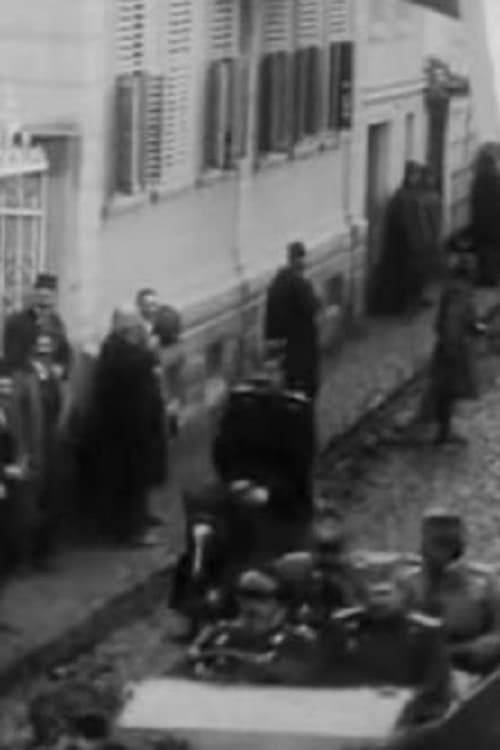
The Reception of the Greek King and the Heir Pavle Made by General Bojovic in Bitola
1918
No user ratings available yet
Representation score: 1.2 out of 10

Representation Score
Minimal
1912
Director
Yanaki Manaki, Milton Manaki
Runtime
4 minutes
Average Rating
No ratings yetNew Showbiz Analysis
This 1912 documentary serves as a vital historical archive of the Balkan region rather than a modern narrative designed for characters who reflect more than one aspect of diversity. The Manaki brothers capture a specific moment of statecraft and regional social landscapes through a lens of early 20th-century institutionalism. Since the film documents a royal visit, the content is naturally constrained by the rigid social and patriarchal norms of the era. The lack of diverse representation is a reflection of the historical period's demographic and social realities rather than a contemporary creative choice. Ultimately, the film functions as a preservation of historical authority. It provides a window into the past but lacks the framework for modern discussions regarding gender, identity, or disability.
Category Breakdown
The footage does not include any LGBTQ+ characters or narratives. As a recording of a formal state visit, it adheres to the social norms of the early 20th century.
The film centers on traditional male leadership and statecraft during the visit of a political figure. It does not depict non-traditional gender roles or challenge existing hierarchies.
The film acts as a historical record of the Balkan region's demographics. It reflects the era's ethnic complexities without making deliberate modern narrative choices about diversity.
The content emphasizes traditional state institutions and authority. It reinforces established political structures rather than offering secular or deconstructive perspectives.
There is no discernible evidence regarding the representation of physical or neurodivergent disabilities. The short documentary format lacks character-driven arcs to explore these themes.
Present on Screen
Limited or Absent
Official Synopsis
Early Balkan footage.
1918
1905
1905
1908
1911
1911
1908
1908
No reviews yet. Be the first to share your thoughts on this movie!
Use the rating form above to leave a star rating and optional review.