
Exit
2014
No user ratings available yet
Representation score: 8.2 out of 10
Representation Score
Fair
2016
Director
Zhang Tao
Runtime
108 minutes
Average Rating
No ratings yetNew Showbiz Analysis
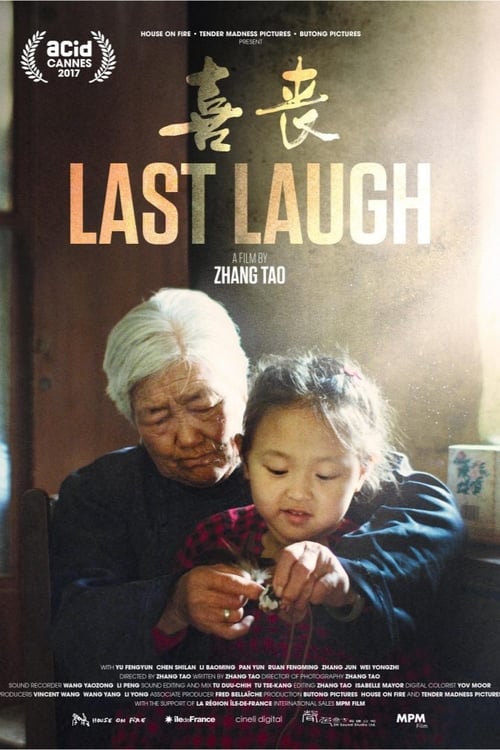
Last Laugh is a work of social realism that examines the friction between traditional Chinese family structures and modern institutional realities. It succeeds by challenging the idea of the harmonious family, instead presenting it as a site of neglect and tension. The film's strength lies in its critique of both familial and institutional support systems. By centering on an elderly woman's displacement, it provides a grounded look at the failures of social infrastructure in rural China. However, the film lacks explicit representation for LGBTQ+ or neurodivergent identities. While it offers a strong cultural perspective, the protagonist's lack of control limits the depth of her individual empowerment.
Category Breakdown
The film focuses on traditional familial duties and elder care. It does not include any non-straight or non-cisgender identities or narratives questioning the assumption that everyone is straight.
A female protagonist provides narrative weight, yet she struggles for control against her children's decisions. The film highlights her vulnerability within a patriarchal family structure.
Set in Shandong province, the film offers a culturally specific perspective. It centers on the socio-economic struggles of the Chinese working class.
The narrative critiques the traditional family unit as a site of tension rather than stability. It deconstructs idealized, harmonious family models through social realism.
The protagonist's physical vulnerability drives the plot. The film avoids sentimentality, focusing instead on the broader social and logistical issues caused by her decline.
Present on Screen
Limited or Absent
Official Synopsis
In the Shandong province, an old farmer woman falls. That is enough for her children to sign her up in a nursing home. Nevertheless, places are rare and the poor ill woman is forced to live at her unwelcoming children’s, waiting for a bed to be freed.
2014

1983
2012
2002
2023
2017
2017

2020
No reviews yet. Be the first to share your thoughts on this movie!
Use the rating form above to leave a star rating and optional review.