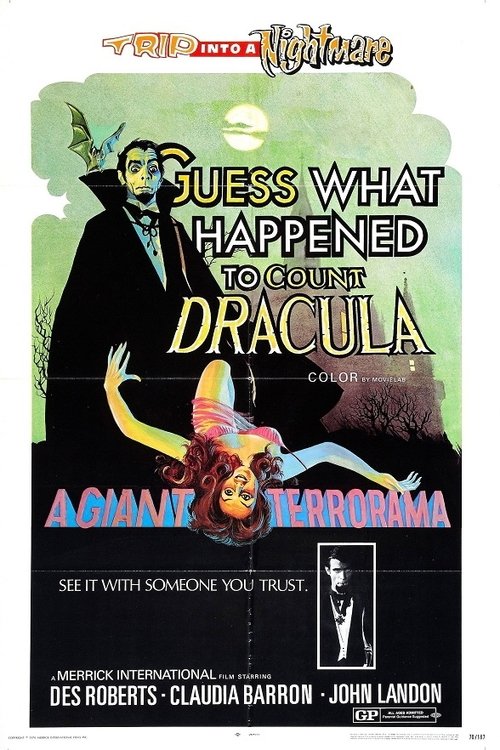
Guess What Happened to Count Dracula?
1971
No user ratings available yet
Representation score: 3.8 out of 10
Representation Score
Limited
1981
NRDirector
Roy Ward Baker
Runtime
98 minutes
Average Rating
No ratings yetNew Showbiz Analysis
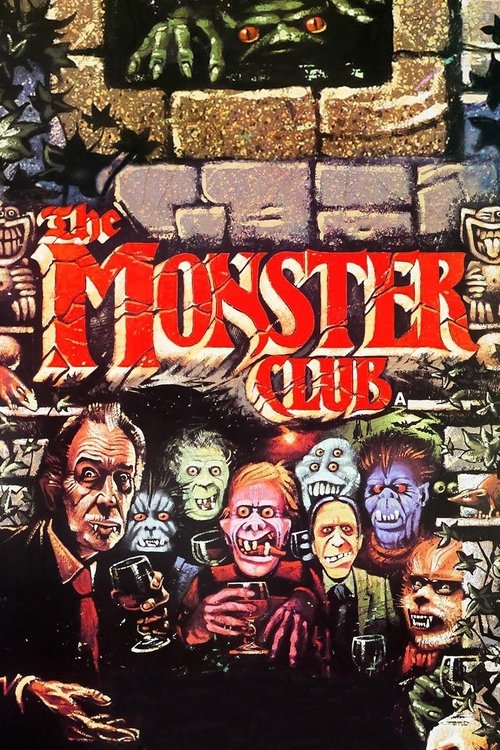
The Monster Club is a product of its time, prioritizing classic horror clichés and episodic entertainment over challenging social hierarchies. It functions as a conventional celebration of cinematic monsters rather than a tool for social commentary. The film lacks the narrative structure to challenge established norms. It relies on standard Western horror aesthetics and traditional genre roles that do not disrupt existing power dynamics. Ultimately, the production reflects the limitations of early 1980s British genre cinema, focusing on escapism and established archetypes rather than diverse representation.
Category Breakdown
The film adheres to traditional horror anthology conventions from the early 1980s. There is no indication of LGBTQ+ identities or same-sex relationships, focusing instead on heterosexual relationships.
The narrative roles follow conventional genre structures. Women do not occupy roles with significant influence or challenge traditional male leadership.
The cast reflects the homogeneous nature of British genre productions from this era. There is no evidence of actors from diverse racial backgrounds.
The story operates as an escapist horror-comedy without promoting anti-Western or secularist themes. Monsters are presented as external threats rather than critiques of societal issues.
The film uses physical differences for plot devices rather than portraying characters with actual disabilities. Differences are used for spectacle rather than nuanced representation.
Present on Screen
Limited or Absent
Official Synopsis
A vampire attacks a horror author on the street and then invites him to a nearby club as a gesture of gratitude, which turns out to be a meeting place for assorted creatures of the night. The vampire then regales him with three stories, each interspersed with musical performances at the club.
1971
1967

1990
1948
1932
1997
1983
1995
No reviews yet. Be the first to share your thoughts on this movie!
Use the rating form above to leave a star rating and optional review.