Find another title
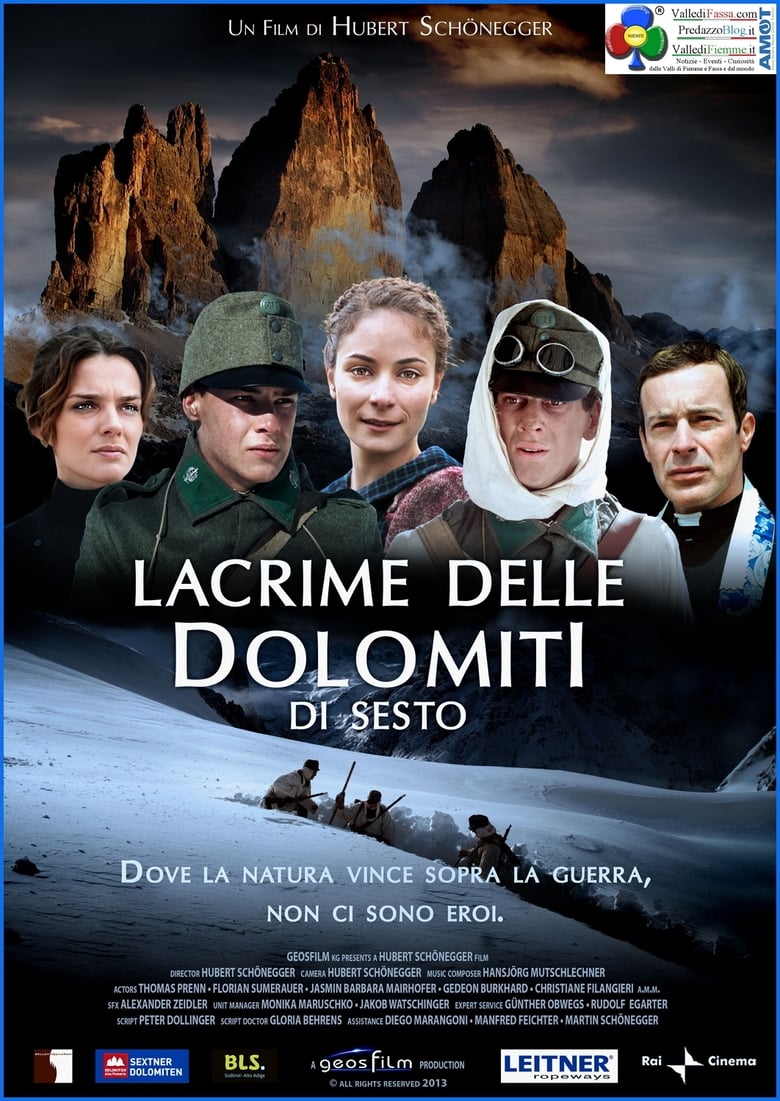
Tears of the Sexten Dolomites
2014
Director
Hubert Schönegger
Average Rating
No ratings yetSynopsis
In 1915, the First World War is in full swing and young men are called to military service in rows - including Franz and Peter. Both are sent to the Dolomite front, in order to fend off a threatened Italian attack. Comradeship and loyalty are needed in the fight, but Franz and Peter are ever enemies. Since Peter's romance with Anna, the competition between the two flares up more. But the circumstances of the war and the harsh weather in the mountains soon end those hostilities.
Where to Watch
Diversity & Representation
Overall Score
Limited
Category Breakdown
LGBTQ+ Representation
The story centers on a heterosexual romantic rivalry between Peter and Anna. There is no evidence of non-cisnormative identities or critiques of heteronormativity within the narrative.
Gender Representation
The film follows a masculine-centric structure focused on military camaraderie. Anna serves as a catalyst for conflict, but her role is defined by her relationship to the male protagonists.
Racial & Ethnic Diversity
Set during WWI in the Dolomites, the film focuses on European combatants. The narrative reflects the homogeneous demographic realities of the era and the specific regional conflict.
Religious & Cultural Diversity
The film explores loyalty and survival within a historical military context. It operates as a standard historical drama without deconstructing traditional values or Western institutions.
Disability Representation
There is no information available regarding the portrayal of physical or neurodivergent disabilities in this work.
Strengths
- The film provides a focused look at the historical realities and regional conflicts of the First World War in the Dolomites.
Areas for Improvement
- The narrative relies on traditional gender hierarchies, with female characters primarily serving as catalysts for male conflict.
- The story lacks ethnic breadth, reflecting a homogeneous demographic that offers little representation beyond the specific European combatants of the era.
- There is a lack of non-cisnormative identities, keeping the romantic elements within conventional heterosexual tropes.
AI Analysis
Tears of the Sexten Dolomites functions as a conventional historical war drama. The narrative prioritizes established genre tropes, specifically masculine rivalry and romantic competition, over the integration of intersectional identities. The film maintains a standard historical perspective that reflects the demographic realities of the First World War in the Dolomites. It lacks significant evidence of progressive narrative subversion or the disruption of social hierarchies. Ultimately, the production adheres to traditional frameworks of the war genre, focusing on regional conflict and character-driven tension within a homogeneous setting.
Rate this Movie
Reviews
No reviews yet. Be the first to share your thoughts on this movie!
Use the rating form above to leave a star rating and optional review.