Family Diary
1962
No user ratings available yet
Diversity score: 4.4 out of 10
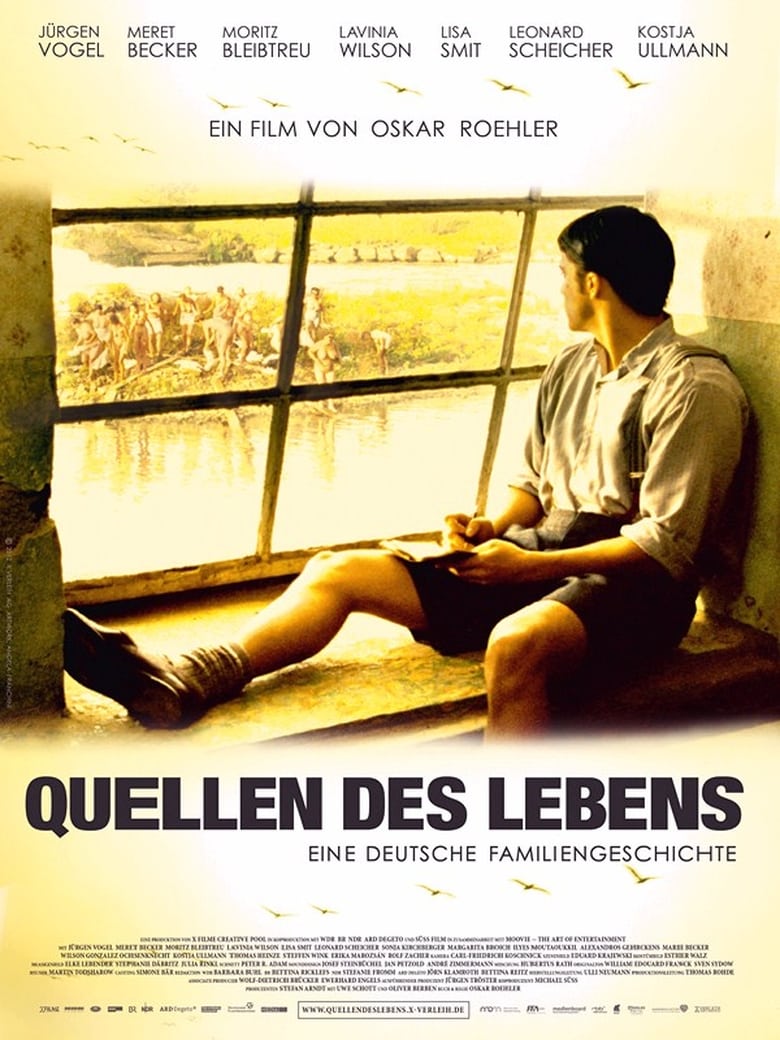
2013
Director
Oskar Roehler
Runtime
174 minutes
Average Rating
No ratings yetSynopsis
This is a family story that covers thirty years in the life of the Freytag family (narrated by the grandson, Robert). When his grandfather returns from Russia in 1949, he becomes part of the German "economic miracle" by producing garden gnomes. Klaus, Robert's father, wants to become a writer. He marries Gisela who almost immediately gets pregnant with Robert - but the marriage doesn't work. Both parents abandon the child, and Robert goes on living with both pairs of grand parents. While his father belongs to the 1968 generation that rebels against their fathers he falls in love with the neighbor's's daughter Laura.
Overall Score
Fair
Category Breakdown
LGBTQ+ Representation
The film focuses on a traditional heteronormative family unit and the dissolution of a marriage. There is no evidence of queer-coded subtext or non-cisnormative identities within the primary narrative.
Gender Representation
The story subverts idealized parental roles by depicting the abandonment of a child by both parents. However, the film lacks specific detail regarding the individual agency of its female characters.
Racial & Ethnic Diversity
Set during the German economic miracle, the saga centers on a homogeneous German family. The narrative reflects the specific demographic realities of post-war West Germany without significant ethnic diversity.
Religious & Cultural Diversity
The film explores the tension between traditional authority and the counter-cultural 1968 generation. It deconstructs Western institutions by framing parents as figures who fail their social and familial obligations.
Disability Representation
The narrative contains no mention of characters with visible or invisible disabilities. No assessment of neurodivergence or physical impairments is possible.
Strengths
Areas for Improvement
AI Analysis
Sources of Life is a generational period drama that prioritizes the psychological nuances of a single family lineage over broad social representation. It functions as a study of human frailty and the breakdown of the nuclear family during Germany's post-war reconstruction. The film's strength lies in its refusal to romanticize domestic stability, instead highlighting systemic dysfunction and the complexities of individual choice. It challenges traditional parental archetypes through the lens of the Freytag family's history. However, the work remains limited by its narrow demographic focus. The narrative is rooted in a specific European historical context that lacks significant intersectional representation regarding race, ethnicity, or LGBTQ+ identities.
1962
2012
1982
2016
2016
2003
1983
2013
2004
2011
2008
1948
No reviews yet. Be the first to share your thoughts on this movie!
Use the rating form above to leave a star rating and optional review.