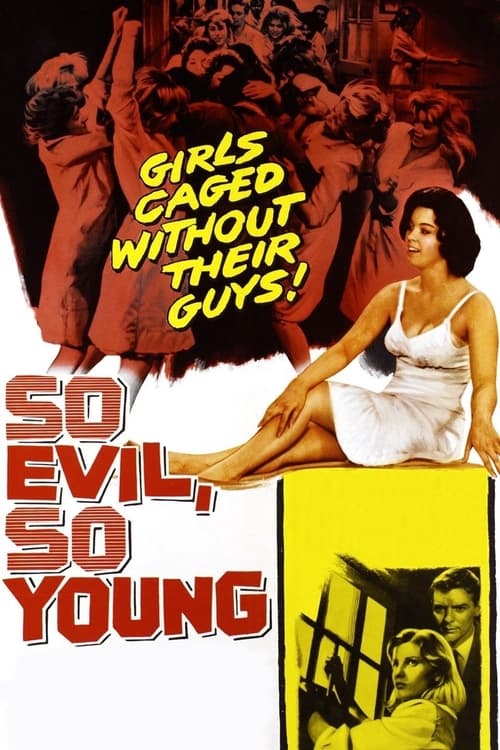
So Evil, So Young
1961
No user ratings available yet
Representation score: 2.0 out of 10

Representation Score
Minimal
1959
NRDirector
Charles F. Haas
Runtime
90 minutes
Average Rating
No ratings yetNew Showbiz Analysis
Girls Town presents a conventional mid-century social problem film. While it explores the conflict between rebellious youth and institutional discipline, it does so without challenging the status quo. The film reinforces traditional hierarchies and religious authority, presenting a largely homogeneous demographic adhering to strict moral standards of the time. Ultimately, the narrative aims to reintegrate characters into the existing social order without disrupting systemic structures.
Category Breakdown
The film does not show explicit representations of LGBTQ+ identities or same-sex relationships. Intense female friendships exist but operate within a traditional framework that assumes everyone is straight.
The story centers around female characters who face conflicts with authority figures. However, male characters play key roles in resolving the plot and dealing with external pressures.
The narrative focuses on a group of young white women. There are no characters of color with significant roles or ability to act.
The film follows mid-century moral structures, using a nun-run institution to enforce social order. It serves as a cautionary tale without critiquing the underlying system.
There is no depiction of physical or cognitive disabilities in the narrative.
Present on Screen
Limited or Absent
Official Synopsis
Chip is killed accidentally while trying to rape a blonde girl, who runs. Silver becomes the number one suspect even though she has an alibi, but due to previous brushes with the law she's sent to Girls Town, a home for young women in trouble with the law which is run by nuns. Silver is rebellious and causes trouble at the school, and her friend Sarafina totters near the brink of self-destruction because of an infatuation with a young singer. Meanwhile Chip's father hires a detective to find out the truth, and Chip's friend Fred gets Silver's sister in trouble at a drag race. Silver has a lot of problems all right.
1961
1938
1957
1958
1971
1972
1969
1955
No reviews yet. Be the first to share your thoughts on this movie!
Use the rating form above to leave a star rating and optional review.