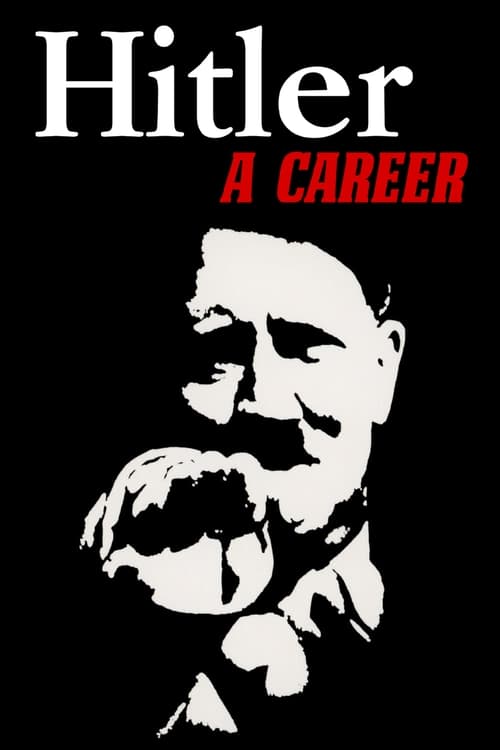
Hitler: A Career
1977
No user ratings available yet
Representation score: 6.1 out of 10

Representation Score
Limited
2023
Director
Jascha Hannover, Claus Bredenbrock
Runtime
91 minutes
Average Rating
No ratings yetNew Showbiz Analysis
The film opens with the Library of Congress, where historian Timothy Ryback handles Hitler’s annotated books with the care of a forensic scientist. This setting immediately challenges the viewer’s assumption that a library represents a neutral, ennobling space. Instead, the documentary argues that the "civilized" European tradition of reading and literature was not a barrier to violence but a prelude to it. By tracing Hitler’s intellectual debts to figures like Ernst Jünger and the broader German literary canon, the film dismantles the myth that the Holocaust was the work of a mindless maniac. It presents the ideology as a sophisticated, if monstrous, synthesis of available texts. The sold meaning is a sobering critique of Western humanism: the very books that define European culture provided the vocabulary for genocide. The camera lingers on underlined passages and tax returns, treating the physical objects as evidence of a mind that "took what it needed" from history. The narrative does not shy away from the discomfort of finding beauty and intellectual rigor in the sources of such hatred. It forces the audience to confront the idea that prejudice and racism are not anomalies but recurring features of societies that value certain forms of reading over others. The ending reinforces this by linking the historical analysis to contemporary right-wing extremism, suggesting that the "handbook for mass murder" is still in circulation. The film’s argument is that understanding the source of these ideas is essential to preventing their recurrence. It does not offer a simple moral lesson but rather a complex, uncomfortable examination of how culture and ideology intertwine. The last image is not a triumphant resolution but a call for vigilance, reminding the viewer that the books remain, and with them, the potential for the ideas they contain.
Category Breakdown
Absent. The documentary focuses exclusively on historical texts and political ideology, with no depiction of queer characters, relationships, or identity.
Limited. Female historians appear as experts, but the narrative centers male figures like Hitler and Jünger. No gender dynamics are explored beyond standard academic roles.
Present. Jewish historians and the specific impact of the Holocaust on Jewish culture are central to the analysis. The film explicitly addresses anti-Judaism as a historical force.
Central. The film argues that Western literary traditions and "civilized" European values provided the intellectual framework for mass murder. It critiques the assumption that reading inherently ennobles the spirit.
Absent. No characters with disabilities are depicted, nor is disability discussed as a social or historical factor in the context of the library or the war.
Present on Screen
Limited or Absent
Official Synopsis
Explores how Hitler’s personal library provides a look into his mind and how it significantly informed his worldview.
1977
1935
2017
1948

2017

2021
2019
2022
No reviews yet. Be the first to share your thoughts on this movie!
Use the rating form above to leave a star rating and optional review.