Clandestine Destiny
1987
No user ratings available yet
Diversity score: 7.5 out of 10
1972
Director
Nelson Pereira dos Santos
Runtime
85 minutes
Average Rating
No ratings yetSynopsis
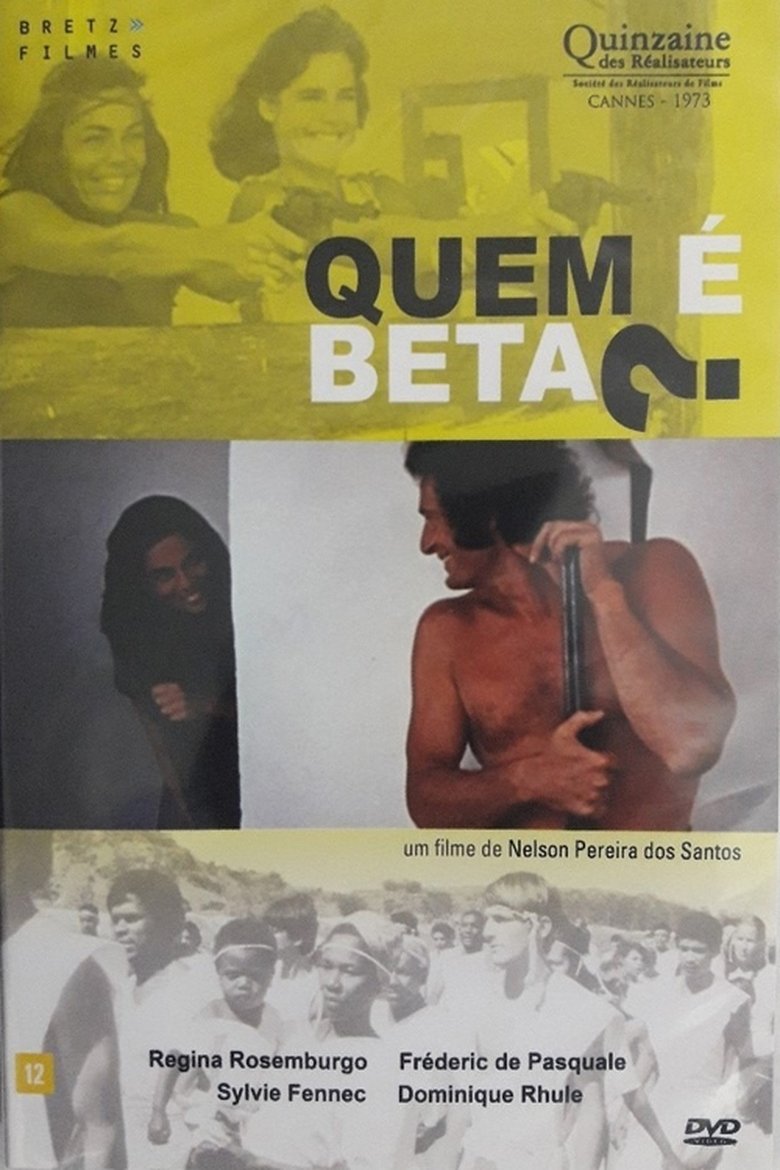
The critical success in France of How Tasty Was My Little Frenchman made possible dos Santos’ delirious science-fiction vision of free love in a post-apocalyptic wilderness besieged by flesh hungry zombies contaminated by an unnamed nuclear attack. Who is Beta? follows two statuesque survivors drawn irresistibly together only to be entranced by the arrival and sudden disappearance of a third, the bewitching raven haired Beta. With its cartoon-like depiction of extreme violence and desire, Who is Beta? offers a heady Pop-infused companion to Hunger for Love. Yet beneath its giddy play of surfaces, dos Santos' underappreciated film gradually reveals a darkly ambiguous metaphoric dimension. -Harvard Film Archive
Overall Score
Good
Category Breakdown
LGBTQ+ Representation
The film centers on a vision of free love within a post-apocalyptic landscape. This thematic focus disrupts heteronormative social structures by prioritizing liberated desire over traditional courtship.
Gender Representation
Female-coded characters like the bewitching Beta drive the film's kinetic energy. The narrative subverts traditional hierarchies by placing these survivors at the center of the plot's progression.
Racial & Ethnic Diversity
Rooted in the Cinema Novo movement, the film challenges Anglo-Saxon cinematic hegemony. It utilizes a post-apocalyptic wilderness to explore decolonial themes outside of Western norms.
Religious & Cultural Diversity
The setting critiques Western institutional stability by depicting a world after a nuclear attack. It deconstructs the necessity of organized religion and capitalism in favor of survival.
Disability Representation
The narrative contains no explicit mention of characters with visible or invisible disabilities.
Strengths
Areas for Improvement
AI Analysis
Nelson Pereira dos Santos uses a science-fiction framework to dismantle established power structures. By placing the story in a post-nuclear wilderness, the film moves away from traditional Western social orders toward a more liberated, albeit ambiguous, existence. The film's strength lies in its ability to mask systemic critiques behind a Pop-infused, kinetic aesthetic. It successfully uses genre tropes to explore themes of desire and the collapse of institutional stability. While the film excels at subverting social hierarchies, the specific identities of characters remain somewhat obscured by the film's focus on surface-level play and stylized violence.
1987
1974

1960
1969

1985
1979

1986
2001

1989

2015
1969

1965
No reviews yet. Be the first to share your thoughts on this movie!
Use the rating form above to leave a star rating and optional review.