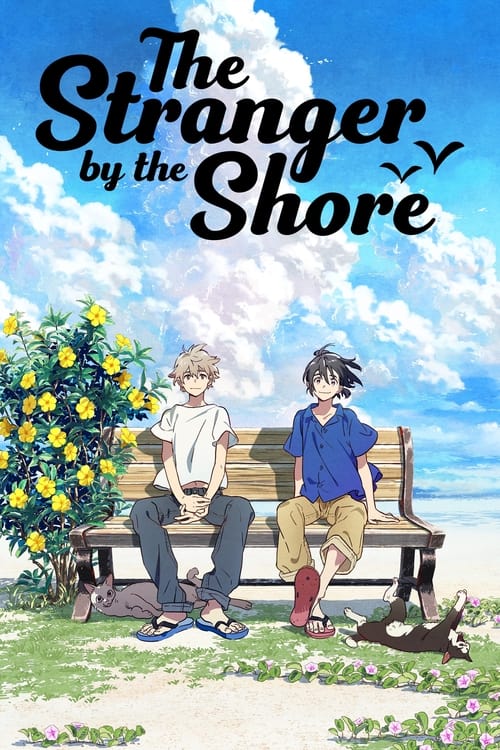
The Stranger by the Shore
2020
No user ratings available yet
Representation score: 6.3 out of 10

Representation Score
Good
2019
Director
Tatsuyuki Nagai
Runtime
108 minutes
Average Rating
No ratings yetNew Showbiz Analysis
Her Blue Sky excels as a character-driven study that prioritizes women's ability to drive the story. By focusing on the internal lives and decisions of its women, the film successfully challenges traditional patriarchal storytelling conventions. However, the film lacks breadth in identity representation. It remains ethnically uniform and does not explicitly include LGBTQ+ identities, focusing instead on localized, traditional social structures. Ultimately, the film offers a sophisticated exploration of interpersonal dynamics. It opts for a nuanced look at emotional realism and personal responsibility over a broader critique of societal structures.
Category Breakdown
The film explores deep friendships and emotional intimacy among three female protagonists. However, these relationships are not explicitly identified as LGBTQ+.
The story centers on the aspirations and struggles of its female characters. Their actions and decisions are driven by their own goals rather than their relationships to men.
Set in rural Japan, the cast is ethnically uniform. The story focuses on the cultural and socioeconomic realities of a specific Japanese community.
The film highlights the importance of family duty and the melancholic passage of time. It prioritizes personal emotional truth over strict moral codes within traditional social structures.
The story deals with universal human experiences such as grief and trauma. These are presented as common emotions rather than specific conditions like neurodivergence or physical disabilities.
Present on Screen
Limited or Absent
Official Synopsis
High school student Aoi Aioi lives with her elder sister, Akane, after a tragic accident took their parents away 13 years ago. Because Akane has since been taking care of her single-handedly, Aoi wants to move to Tokyo after her graduation to relieve her sister's burden and pursue a musical career, inspired by Akane's ex-boyfriend Shinnosuke "Shinno" Kanamuro. Shinno was part of a band until he left for Tokyo to become a professional guitarist after the sisters' parents passed away, and he was never to be seen again.
2020
2020

2024
2023

2024

1996
2016

2019
No reviews yet. Be the first to share your thoughts on this movie!
Use the rating form above to leave a star rating and optional review.