Kamen Rider #1
2016
No user ratings available yet
Representation score: 5.4 out of 10
Representation Score
Fair
2021
Director
Koichi Sakamoto
Runtime
22 minutes
Average Rating
No ratings yetNew Showbiz Analysis
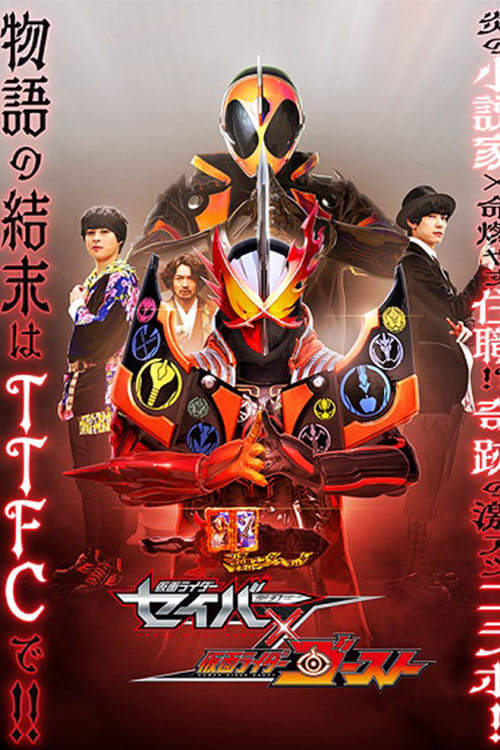
Kamen Rider Saber × Ghost is a genre-specific crossover that prioritizes established heroic mythologies over the deconstruction of social hierarchies. The narrative structure is designed to facilitate action and fan service within the existing franchise ecosystem. While the film offers meaningful moments highlighting empathy and the protection of vulnerable individuals, it does not actively seek to disrupt traditional gender, racial, or cultural norms. It functions as a conventional superhero film, emphasizing the restoration of order through individual heroism.
Category Breakdown
The film adheres to traditional character dynamics typical of the Tokusatsu genre. There is no representation of non-binary gender identities or critiques of the assumption that everyone is straight or cisgender.
Female characters such as Mei and a young girl play pivotal roles in advancing the plot. However, their influence is secondary compared to the primary male leads, Touma and Takeru.
Set in modern Japan, the film showcases a predominantly homogeneous cast. The storyline focuses more on supernatural elements than on diverse racial or ethnic backgrounds.
The story upholds a moral framework centered around communal responsibility and protection. It does not explicitly challenge religious or Western institutional norms.
Characters who are survivors of experiments suggest physical or psychological trauma. These figures mainly serve as plot drivers to motivate the heroes' sense of justice.
Present on Screen
Limited or Absent
Official Synopsis
Touma and Mei find a girl who is looking for her brother. When they try to talk to her, she is attacked by Desast and runs away. Why is Desast after her? Meanwhile, as he’s looking for Kanon, Takeru Tenkuji finds survivors of Danton’s experiments and vows he won’t let them be sad like Chloe was. When he goes off to look for more survivors, he runs into Touma and Mei…
2016
2022
2010
2016
2011
2015
2010
2010
No reviews yet. Be the first to share your thoughts on this movie!
Use the rating form above to leave a star rating and optional review.