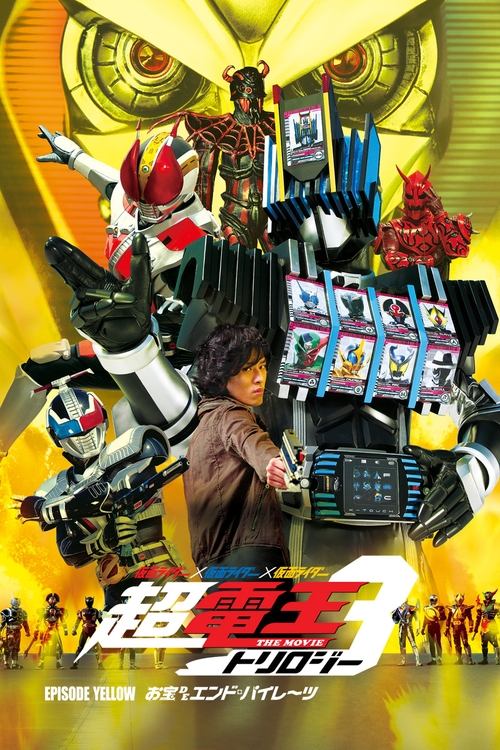
Super Kamen Rider Den-O Trilogy - Episode Yellow: Treasure de End Pirates
2010
No user ratings available yet
Representation score: 3.9 out of 10
Representation Score
Fair
2010
Director
Kenzō Maihara
Runtime
73 minutes
Average Rating
No ratings yetNew Showbiz Analysis
The film centers on a specific type of action narrative within the tokusatsu genre. It uses science fiction elements like time travel and non-human beings to explore themes of identity and partnership. These themes are closely tied to the franchise’s continuity. Although the story touches on intriguing ideas about breaking bonds and ethical considerations, it doesn’t aim to tackle broader social hierarchies. Representation is mostly confined to the relationship between humans and Imagin. Overall, the film prioritizes traditional heroic figures and genre conventions over deeper social commentary or characters who reflect more than one aspect of diversity.
Category Breakdown
The film doesn't include any explicit LGBTQ+ characters or stories. The focus is on the partnership between humans and Imagin in a sci-fi setting.
Women play key roles in solving the mystery of a doppelganger, but the film follows typical action storylines. Gender roles are shaped by their function in the plot rather than challenging traditional power structures.
Given its Japanese origin, the cast is fairly uniform. The story emphasizes differences between humans and Imagin rather than exploring racial or ethnic diversity.
The story delves into ethical dilemmas through time travel and contracts. However, it sticks to conventional heroic figures without questioning specific religions or societal norms.
Injuries are used to advance the plot, but there are no characters with disabilities who drive the narrative or are shown in an empowering light.
Present on Screen
Limited or Absent
Official Synopsis
When Ryotaro and Momotaros are injured in a fight with an Imagin, Kotaro, Kamen Rider New Den-O, and his Imagin partner Teddy return to help solve the case of a stolen ticket and the mystery of a young woman’s doppelganger! But Owner shatters their partnership when he creates a new contract with Teddy, as the Mantis Imagin rampages! Can Kotaro overcome his loss and discover the truth behind the two Mikus?
2010
2010
2009

2018
2010
2007
2014
2014
No reviews yet. Be the first to share your thoughts on this movie!
Use the rating form above to leave a star rating and optional review.