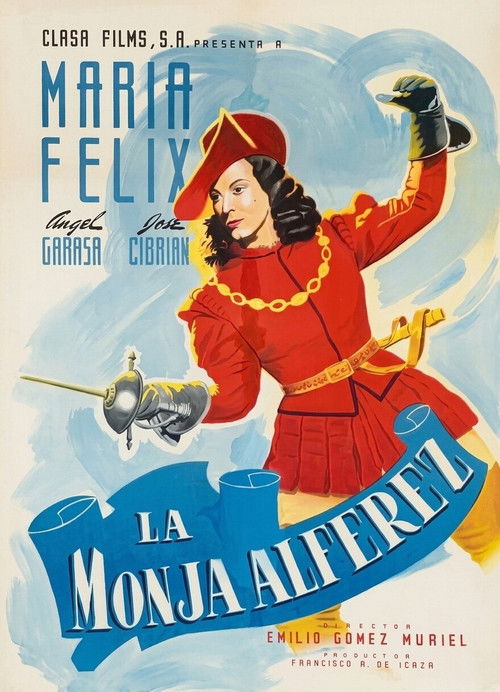
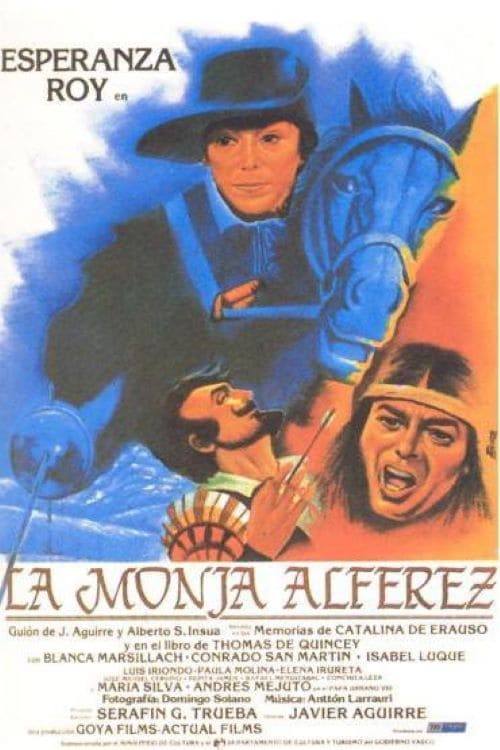
La monja alférez
1944
No user ratings available yet
Representation score: 5.6 out of 10
Representation Score
Fair
1987
Director
Javier Aguirre
Runtime
114 minutes
Average Rating
No ratings yetNew Showbiz Analysis
La monja alférez is a character-driven historical adventure that centers on the subversion of social and religious hierarchies. The film's strength lies in its protagonist's active rejection of institutional confines, using gender transgression to drive the narrative forward. While the film offers a strong critique of gendered limitations and religious restrictions, it remains tethered to the demographic homogeneity of its 16th-century setting. The focus is primarily on individual ability to act rather than broad social diversity. Ultimately, the film provides a meaningful framework for exploring identity subversion, even if it operates within the narrow cultural confines of its historical era.
Category Breakdown
The film explores themes of gender fluidity and performance through a woman who navigates the world disguised as a man. This central plot device highlights the complexities of identity and gender roles.
The protagonist takes a leading, active role in challenging traditional gender roles and hierarchies. She rejects submissive roles and embraces physical adventure, disrupting the rigid gender norms of 16th-century society.
The 1592 Spanish setting limits the demographic diversity, reflecting the homogeneous social structures of the Spanish Empire during that time. The narrative focuses on a single cultural context without much variation.
The story portrays the convent as a confining space that needs to be overcome. It emphasizes individual autonomy and secular adventure over the restrictive environment of religious institutions.
There is no evidence regarding the inclusion or portrayal of characters with physical or neurodivergent disabilities.
Present on Screen
Limited or Absent
Official Synopsis
Set in 1592 and based on a true story, a Spanish nun flees the convent and lives an adventurous life disguised as a man.
1944
2009

2015
1972

2017
1960

2014
1992
No reviews yet. Be the first to share your thoughts on this movie!
Use the rating form above to leave a star rating and optional review.