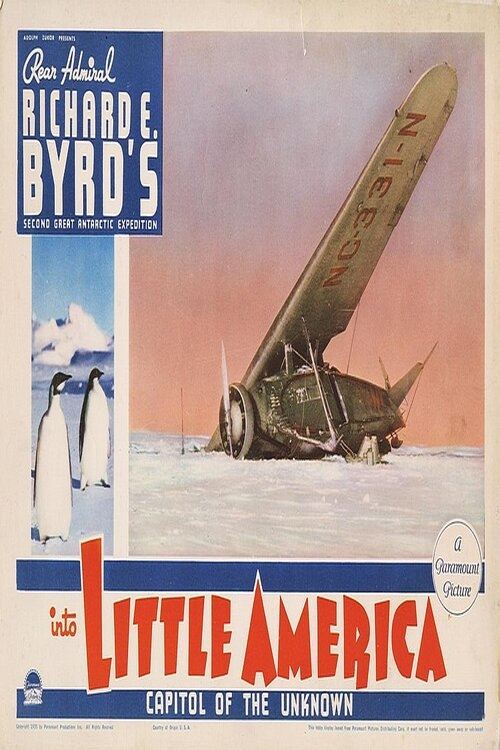
Into Little America
1935
No user ratings available yet
Representation score: 0.2 out of 10
Representation Score
Minimal
1931
PassedDirector
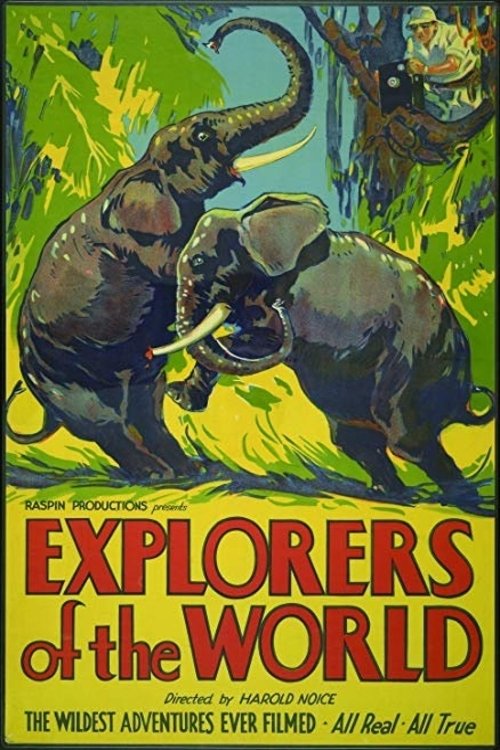
Harold Noice
Runtime
120 minutes
Average Rating
No ratings yetNew Showbiz Analysis
Explorers of the World serves as a historical record of early 20th-century expeditions, emphasizing Western scientific expansion and the categorization of global cultures. The film operates through a lens of institutional authority, documenting various geographies without providing characters who reflect more than one aspect of diversity. While the ethnographic footage offers visual access to diverse global geographies and ethnicities, the power dynamics remain firmly rooted in the era's colonial frameworks. The creative intent focuses on documentation rather than challenging established norms. Ultimately, the film reinforces traditional hierarchies. It presents a world defined by Western discovery, where leadership is associated with masculinity and non-Western subjects are primarily viewed through an ethnographic lens.
Category Breakdown
The film does not include any LGBTQ+ characters or narratives. It follows the assumption that everyone is straight or cisgender, which was common in 1931 expeditionary filmmaking.
The story centers around a masculine explorer character. Women may appear in ethnographic footage, but they serve as subjects of study rather than having active roles.
Non-Western subjects appear in ethnographic footage from places like Borneo, Bali, Africa, and the Amazon. However, the Western expedition leaders maintain control over the subjects observed.
The film highlights Western scientific methods and institutions like the American Museum of Natural History. It upholds the prestige of colonial-era discoveries.
There is no indication of subjects with disabilities being portrayed with real power. Physical endurance was the standard measure for participants during this period of filmmaking.
Present on Screen
Limited or Absent
Official Synopsis
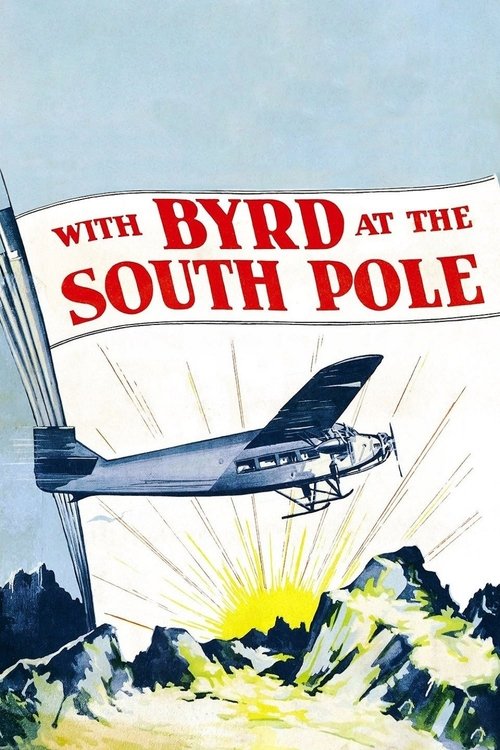
A compilation film produced by the American Museum of Natural History with footage from six major expeditions of the 20th-Century: the Stoll-McCracken Siberian Arctic expedition, for the American Museum of Natural History, on the schooner Effie M. Morrissey; the exploration of Borneo and Bali by Gene Lamb; an African expedition by James L. Clark, vice-director of the American Museum of Natural History; the Imperial Trans-Antarctic Expedition under the guidance of Lieutenant Commander J. R. Stenhouse that made it to the Ross Sea; footage from the Byrd Antarctic Expedition, shot by Dr. Laurence E. Gould, geologist and second-in-command; and footage from the Tarlano Ethnological Expedition of the Amazon River by Harold Noice.
1935
2007
1928
1956
1951
1924
1949
1930
No reviews yet. Be the first to share your thoughts on this movie!
Use the rating form above to leave a star rating and optional review.