
The Man with the Rubber Head
1901
No user ratings available yet
Representation score: 0.1 out of 10
Representation Score
Fair
1898
TV-PGDirector
Georges Méliès
Runtime
1 minutes
Average Rating
No ratings yetNew Showbiz Analysis
Méliès’ work serves as a foundational pillar of cinematic surrealism rather than a tool for social representation. The film's primary achievement is the disruption of visual reality through trick photography and fantastical storytelling. While the film lacks diversity, its refusal to adhere to the rigid naturalism of the late 19th century marks a significant departure from contemporary cinematic clichés. It prioritizes imaginative artifice over documentary-style realism. Ultimately, the work functions as a secular exploration of the impossible. It succeeds in challenging the stability of the perceived world through trick photography, even if it falls short of modern standards for representation.
Category Breakdown
The film focuses on a solo conjurer without any explicit LGBTQ identity or non-cisgender expressions. Its surrealist style breaks away from era-specific realism, although it doesn't engage directly with LGBTQ themes.
The narrative centers entirely on a single male performer. It lacks a diverse cast to challenge gender hierarchies, but it avoids traditional feminine stereotypes by emphasizing male physical prowess.
The film features a homogeneous cast centered around the male performer. There is no evidence of racial diversity or the inclusion of non-white characters in this short.
This piece prioritizes escapism and the impossible over traditional moralizing. It creates a secular, theatrical space where the laws of nature and social structures are suspended.
Physical fragmentation is used as a comedic, magical device rather than a portrayal of lived experiences. It explores non-normative physical states without giving actual disabled individuals a leading role.
Present on Screen
Limited or Absent
Official Synopsis
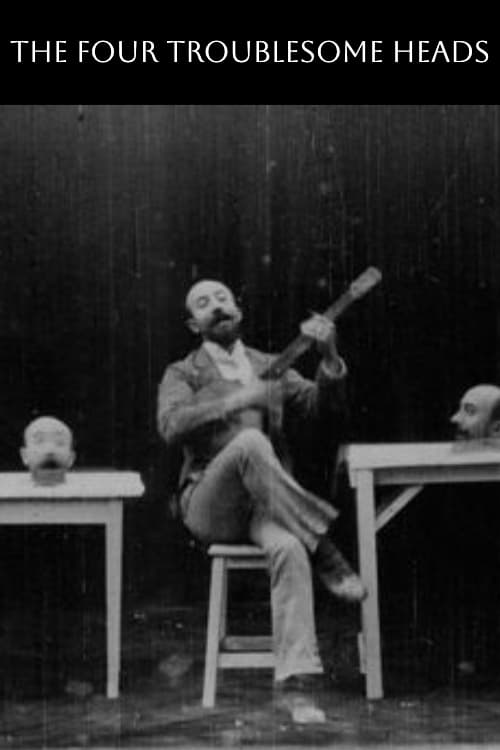
One of the greatest of black art pictures. The conjurer appears before the audience, with his head in its proper place. He then removes his head, and throwing it in the air, it appears on the table opposite another head, and both detached heads sing in unison. The conjurer then removes it a third time. You then see all three of his heads, which are exact duplicates, upon the table at one time, while the conjurer again stands before the audience with his head perfectly intact, singing in unison with the three heads upon the table. He closes the picture by bowing himself from the stage.
1901
1901
1906
1904
1900
1904
1905
1897
No reviews yet. Be the first to share your thoughts on this movie!
Use the rating form above to leave a star rating and optional review.