
Napoli milionaria
1962
No user ratings available yet
Representation score: 3.2 out of 10
Representation Score
Limited
1943
Director
Mario Bonnard
Runtime
91 minutes
Average Rating
No ratings yetNew Showbiz Analysis
The film is a period-typical social comedy that adheres strictly to the cinematic conventions of 1943 Italy. It relies on traditional romantic archetypes and localized social dynamics to drive its plot. While the film provides a sense of community through its marketplace setting, it lacks significant diversity. The narrative reinforces conventional social structures and straight-centered courtship patterns. Ultimately, the production reflects the historical and cultural constraints of its time, offering a representation profile that is consistent with mid-century European dramatic-comedy.
Category Breakdown
The film focuses on heterosexual relationships and traditional courtship, with no depiction of same-sex intimacy.
Women are portrayed through established mid-century stereotypes. Elide acts as a spirited working professional, while Elsa serves as the primary romantic interest for the protagonist.
The setting reflects the demographic homogeneity of 1940s Italy. The production offers little diversity, adhering to the standard cultural baseline of its era.
The story celebrates local community and traditional commerce within a Roman marketplace. It reinforces social stability and traditional interpersonal roles rather than challenging them.
There is no mention of characters navigating physical, sensory, or neurodivergent experiences within the narrative.
Present on Screen
Limited or Absent
Official Synopsis
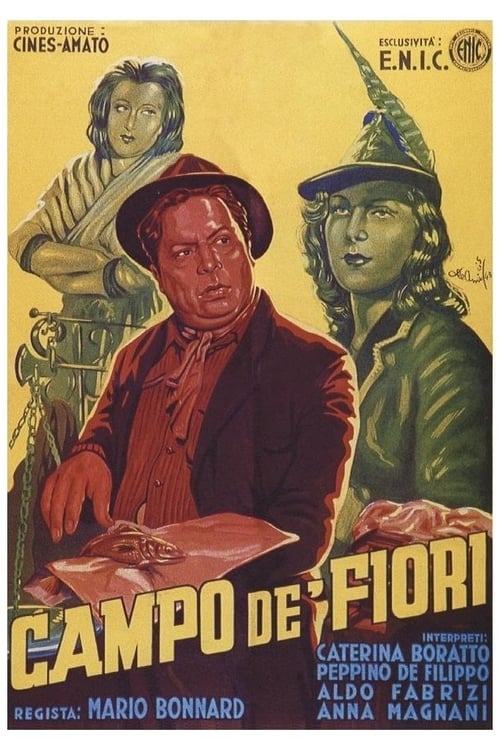
Peppino, a fishmonger on Campo de' Fiori, a famous Roman marketplace, works alongside Elide, a greengrocer, who has a soft spot for him, despite the fact they argue all day long... But neither Peppino, nor his friend Aurelio, the barber, are interested in getting married. Until he meets the beautiful Elsa...
1962
1950
1942

1964

1976
1954
1946

1947
No reviews yet. Be the first to share your thoughts on this movie!
Use the rating form above to leave a star rating and optional review.