You are here:

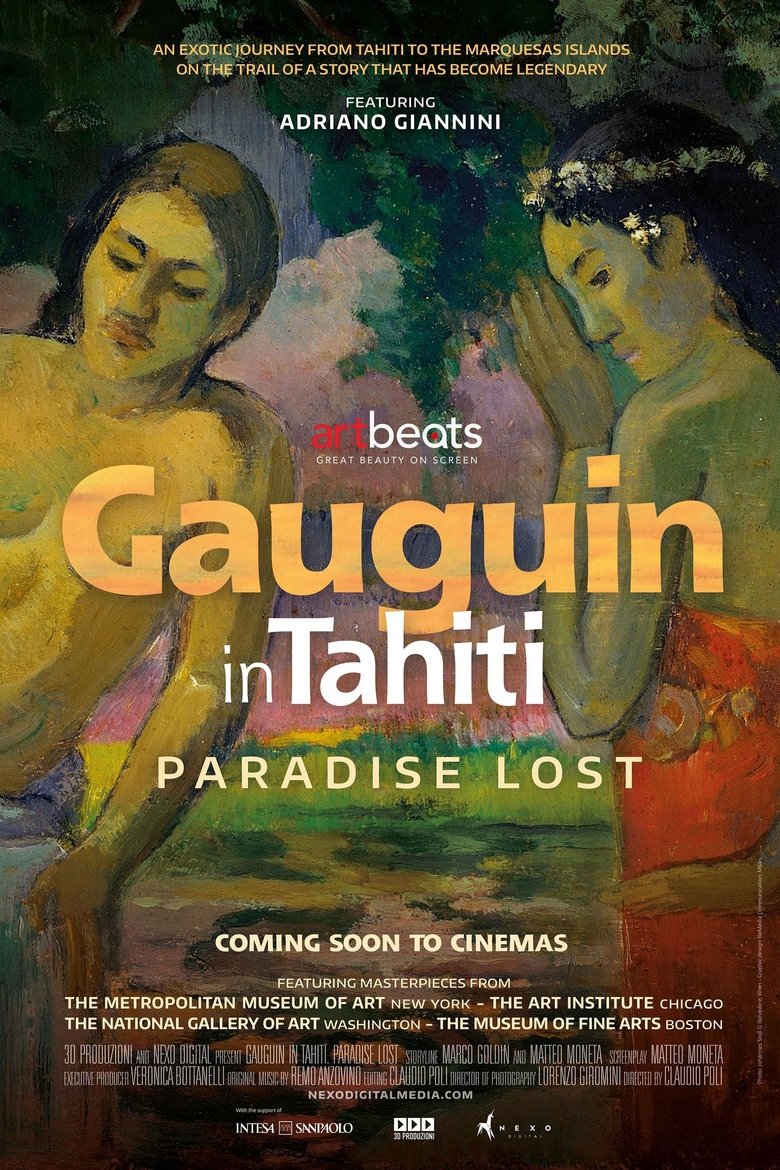
Gauguin in Tahiti. Paradise Lost

Gauguin in Tahiti. Paradise Lost

Representation Score

5.7/10

Fair

2019

G

Director

Claudio Poli

Runtime

88 minutes

Average Rating

No ratings yet

New Showbiz Analysis

Gauguin in Tahiti explores complex themes of colonial displacement and the intersection of Western art with indigenous landscapes. By focusing on the artist's journey from Marseille to the Pacific, the film addresses the disruption of traditional European social norms. The documentary's strength lies in its engagement with post-colonial themes and the critique of Western institutions. It positions the Pacific not just as a setting, but as a site for deconstructing the restrictive nature of Western thought. However, the film remains primarily a biographical study of a male artist. This focus limits the depth of gender subversion and leaves questions regarding the actual ability to act granted to the indigenous people depicted.

Watch this, not that →

Category Breakdown

Does Gauguin in Tahiti. Paradise Lost have LGBTQ+ representation?

Fair

The film hints at Gauguin's departure from typical European expectations. Although there are no confirmed queer narratives, his life suggests a potential for exploring non-conformity.

How does Gauguin in Tahiti. Paradise Lost portray gender?

Fair

The story focuses on the male perspective of the artist. However, the framing suggests a critique of the traditional Western male's relationship with nature and other cultures.

How racially and ethnically diverse is Gauguin in Tahiti. Paradise Lost?

Good

The setting involves interactions between European settlers and Pacific Islanders. Indigenous landscapes play a central role, but it's unclear whether they play a significant role in driving the story or are merely artistic backdrops.

How does Gauguin in Tahiti. Paradise Lost represent religion and culture?

Good

The film contrasts Western civilization with the Pacific, using the 'Paradise Lost' theme to critique industrialization and Western materialism in favor of non-Western spiritual essences.

Does Gauguin in Tahiti. Paradise Lost include disability representation?

Minimal

There is no information regarding the portrayal of neurodivergence or physical disabilities in this documentary.

Present on Screen

  • Engages deeply with post-colonial themes and the tension of the colonial encounter.
  • Critiques Western industrialization and materialism through a non-Western lens.
  • Explores the deconstruction of traditional European social and cultural norms.

Limited or Absent

  • The biographical focus leans heavily on a singular male perspective.
  • Indigenous ability to act may be secondary to the artist's personal inspiration.
  • Lack of explicit evidence regarding queer narratives or disability representation.

Official Synopsis

In 1891 Gauguin left Marseille for the Pacific, marking the beginning of a journey towards the essence of life and art, and forging his destiny as one of the greatest modern painters who ever lived.

How are these scores produced? →

Where to Watch

Rate this Movie

No rating selected
Use arrow keys to select a rating from 1 to 5 stars
Optional text review, maximum 2000 characters
Tip: Wrap spoilers with ||double pipes|| to hide them
0/2000 characters
You must be signed in to submit a rating

Reviews

No reviews yet. Be the first to share your thoughts on this movie!

Use the rating form above to leave a star rating and optional review.