
The Merry Widow
1934
No user ratings available yet
Representation score: 5.1 out of 10
Representation Score
Minimal
1933
Director
Monty Banks
Runtime
70 minutes
Average Rating
No ratings yetNew Showbiz Analysis
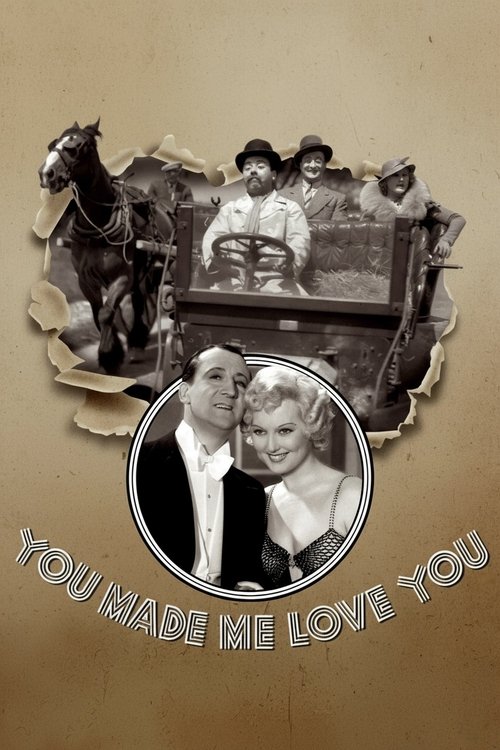
You Made Me Love You is a conventional 1930s romantic comedy that upholds established social and class hierarchies. The plot centers on a wealthy father who uses financial manipulation to influence his daughter's marriage, reinforcing traditional patriarchal structures. The film reflects the Anglo-American social circles and Western values of its time. It lacks significant representation of diverse identities, instead focusing on maintaining class interests and familial control. Ultimately, the movie offers minimal disruption to the status quo, serving as a standard commercial comedy of the early sound era.
Category Breakdown
The film focuses on a heterosexual relationship and does not include any characters with non-traditional gender identities or sexual orientations. It also does not critique the assumption that everyone is straight or cisgender.
The story revolves around a father who controls his daughter's romantic life. While the daughter is central, her role seems secondary to the father's decisions.
The setting suggests a focus on Anglo-American social circles. The premise likely adheres to the homogeneous Western casting standards typical of the early 1930s.
The plot emphasizes Western social values such as wealth, marriage, and social standing. It reinforces the importance of the family unit and the influence of money.
There is no indication of characters with visible or invisible disabilities in the narrative.
Present on Screen
Limited or Absent
Official Synopsis
A rich American businessman in London makes believe he's lost all his money so that his daughter will marry a composer.
1934
1937

1930
1930
1941
1937
1930
1924
No reviews yet. Be the first to share your thoughts on this movie!
Use the rating form above to leave a star rating and optional review.