Support Your Local Sheriff!
1969
No user ratings available yet
Representation score: 1.6 out of 10
Representation Score
Minimal
1963
NRDirector
Andrew V. McLaglen
Runtime
127 minutes
Average Rating
No ratings yetNew Showbiz Analysis
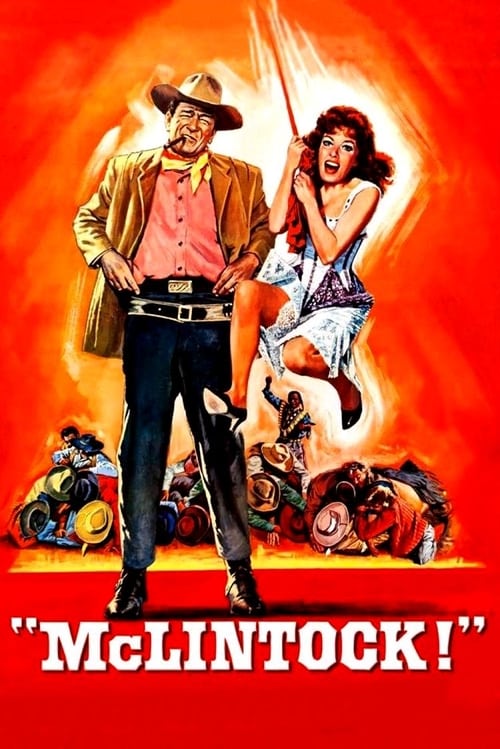
McLintock! is a classic Western that emphasizes traditional genre clichés and historical archetypes. The narrative is rooted in conservative structures that reinforce established social and racial norms of the American frontier. While the film lacks diversity in terms of race and LGBTQ+ representation, it avoids a lower gender score due to its strong female lead, Mailie. She provides a spirited counterpoint to the protagonist, complicating the standard patriarchal hierarchy. Overall, the film celebrates individualist frontier values and property rights, offering little critique of the era's demographic or cultural homogeneity.
Category Breakdown
The film strictly follows conventions that assume everyone is straight and cisgender. There is no representation of LGBTQ+ identities or same-sex relationships.
The film focuses on male rugged individualism, but Mailie challenges this by using her wit and taking an active role. She does not act as a submissive character but instead disrupts the male-dominated dynamic.
The cast is primarily white and Anglo-Saxon, reflecting the 1870s Arizona setting. Native Americans are mentioned but lack individual depth or ability to act, serving mainly as part of the environment.
The story upholds traditional Western values such as land ownership and the self-made man. It reinforces mid-century social ideals regarding domestic stability and the frontier spirit.
There are no prominent depictions of visible or invisible disabilities that play a key role in the narrative or serve as central character traits.
Present on Screen
Limited or Absent
Official Synopsis
Aging rancher and self-made man, George Washington McLintock is forced to deal with numerous personal and professional problems. Seemingly everyone wants a piece of his enormous farmstead, including high-ranking government men and nearby Native Americans. As McLintock tries to juggle his various adversaries, his wife—who left him two years previously—suddenly returns. But she isn't interested in George; she wants custody of their daughter.
1969
1972

1971

1958
1954
1970
1975
1939
No reviews yet. Be the first to share your thoughts on this movie!
Use the rating form above to leave a star rating and optional review.