
Don't Look Up
2009
No user ratings available yet
Representation score: 7.1 out of 10
Representation Score
Fair
2013
Director
Antony Szeto
Runtime
87 minutes
Average Rating
No ratings yetNew Showbiz Analysis
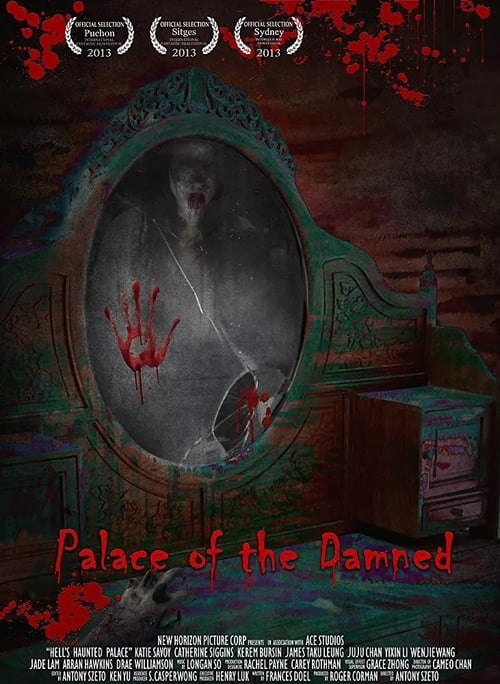
Palace of the Damned is a genre-driven horror film that utilizes East Asian mythology to create tension. It succeeds in diversifying the horror landscape by focusing on Chinese folklore and a female-led historical power struggle. However, the film adheres closely to traditional horror structures. While it offers meaningful cultural immersion, it lacks the complex, multi-layered character depth necessary to move beyond established genre clichés. The narrative follows a familiar 'outsider discovering local legend' framework, which limits its ability to provide deeper social critique.
Category Breakdown
The story focuses on Rebecca's grief over her late fiancé. However, the film does not explicitly confirm non-straight relationships or specific gender identities for the lost partner.
A conflict driven by women shapes the plot through a historical rivalry between two female characters. While this breaks from male-dominated hierarchies, the characters often rely on vengeful spirit archetypes.
The film blends Western protagonists with Chinese settings and folklore. This cross-cultural approach immerses viewers in non-Anglo-Saxon traditions through its diverse cast and locations.
The narrative delves into the Chinese Ghost Festival and jiangshi folklore. It uses these specific spiritual traditions to move beyond typical Western supernatural clichés.
There is no apparent depiction of physical or neurodivergent disabilities within the film's narrative.
Present on Screen
Limited or Absent
Official Synopsis
Following in the footsteps of her late fiancée, who drowned under mysterious circumstances, Rebecca (played by Katie Savoy) and her film crew are in China making a documentary about the Chinese Ghost Festival. There, she learns of a story about a concubine Chan Ju Chi who is violently murdered and thrown into a well by the head concubine Ping Wei (Played by JuJu Chan) within the secret grounds of a palace. Legend has it that the Chan Ju Chi has risen to become a "jiangshi", killing innocent people in the hope of taking over their bodies. Things take a turn when a worker is attacked in a decrepit well within an old palace. Rebecca tries to piece together the mystery behind the legend as one by one the people she knows are gruesomely murdered.
2009

1972

2010
2000

2014
2009

2008

2015
No reviews yet. Be the first to share your thoughts on this movie!
Use the rating form above to leave a star rating and optional review.