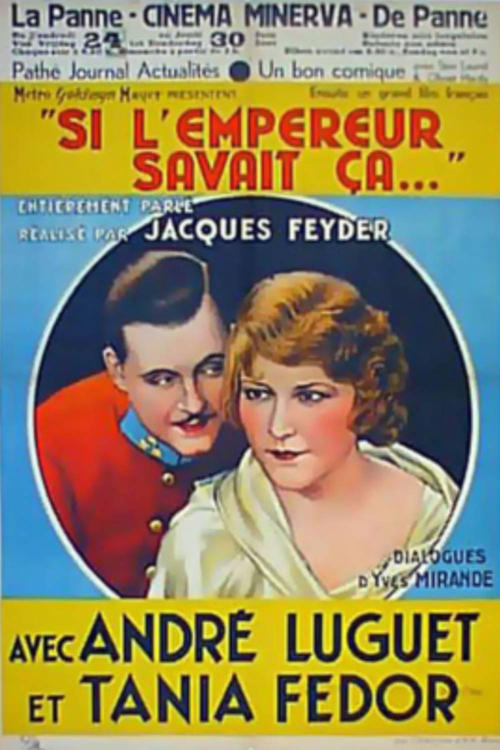
Si l'empereur savait ça
1930
No user ratings available yet
Representation score: 3.0 out of 10

Representation Score
Limited
1928
Director
Sam Taylor
Runtime
111 minutes
Average Rating
No ratings yetNew Showbiz Analysis
Tempest is a historical drama that explores class warfare through the lens of socioeconomic struggle. The story follows a peasant's rise and fall within a rigid military hierarchy, ultimately resolving in the systemic upheaval of the Red Terror. While the film lacks representation for LGBTQ+ and disability categories, it successfully challenges aristocratic privilege. The narrative structure is built around the collapse of traditional imperial power structures and the disruption of social hierarchies. Ultimately, the film's diversity is rooted in its thematic focus on socioeconomic struggle rather than identity-based representation.
Category Breakdown
The film does not include any characters with non-straight sexual orientations or gender identities. The central romantic relationship is between a peasant and a princess, following a traditional heterosexual dynamic.
Female characters seem to follow typical gender roles of the time, serving mainly as romantic gatekeepers. The princess's role is defined by her social standing and her rejection of the protagonist.
The narrative focuses on socioeconomic class differences rather than ethnic identity. Set in Russia, the conflict centers on the divide between peasants and the aristocracy.
The film critically examines the deconstruction of imperial institutions. It portrays the shift from Czarist autocracy to revolutionary fervor as a critique of established power hierarchies.
There is no information available regarding the depiction of physical or neurodivergent characters in this work.
Present on Screen
Limited or Absent
Official Synopsis
In the final days of Czarist Russia, a peasant is raised from the ranks to Lieutenant. The other officers, aristocrats all, resent him, and make his life difficult. He falls in love with a princess, who spurns him. When he is caught in her room, he is stripped of his rank and thrown into prison. Then comes the Red Terror, and the tables are turned.
1930

1935

1942
1925
1927

1925
1926

2000
No reviews yet. Be the first to share your thoughts on this movie!
Use the rating form above to leave a star rating and optional review.