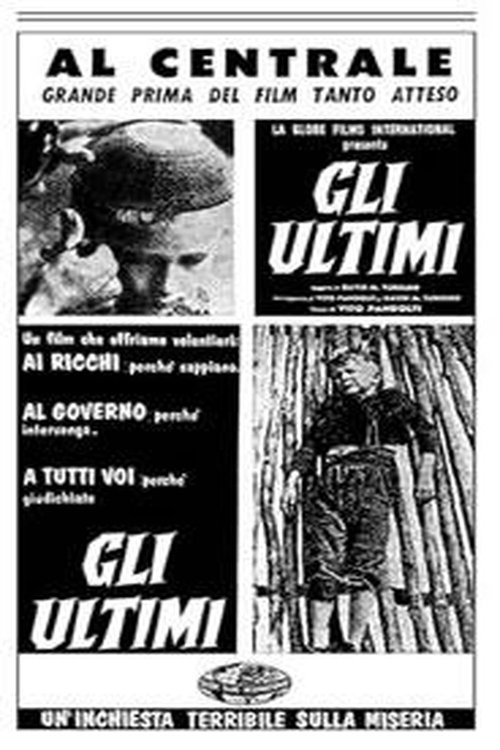
The Last Ones
1963
No user ratings available yet
Representation score: 6.5 out of 10
Representation Score
Good
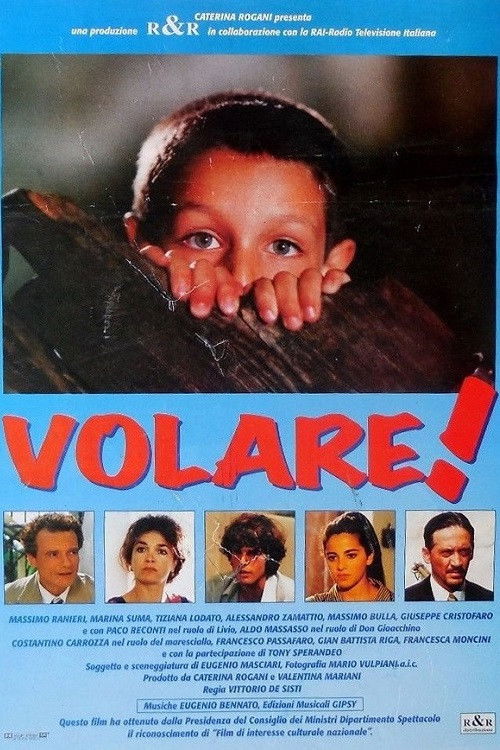
1999
TDirector
Vittorio De Sisti
Runtime
90 minutes
Average Rating
No ratings yetNew Showbiz Analysis
To Fly! offers a nuanced look at the friction between a sensitive individual and a rigid, traditionalist society. It succeeds in portraying the psychological toll of social intolerance through the metaphor of flight. However, the film lacks demographic breadth, with a culturally homogeneous setting providing little representation of racial or ethnic diversity within the 1950s Italian landscape. Ultimately, the film is a sophisticated study of gender non-conformity and the struggle to exist outside dominant social archetypes.
Category Breakdown
The film explores a delicate child navigating a world that refuses to accept his nature. While it lacks explicit identity labeling, the subtext highlights a struggle against the assumption that everyone is straight or cisgender and non-conformity.
The narrative disrupts mid-century masculine hierarchies by centering on a sensitive protagonist. It challenges rigid gendered expectations of boyhood by framing delicacy as a source of internal conflict.
The story focuses on a culturally homogeneous Mediterranean environment in 1950s Italy. There is no evidence of significant racial or ethnic blending within this specific social microcosm.
The film portrays traditional 1950s social structures as sources of hardship and harassment. It uses the dream of flight to critique how established social orders can obstruct individual flourishing.
The protagonist's delicate nature suggests neurodivergence or heightened emotional sensitivity. The film focuses on the psychological experience of being different rather than depicting a physical disability.
Present on Screen
Limited or Absent
Official Synopsis
1950s. Gege (Giuseppe Cristofaro) is a delicate child who lives in a hard world that does not accept it. He thus takes refuge in the dream to escape the many small daily harassment. His desire would be to become an airplane pilot and for this the notes of "Volare" by Domenico Modugno accompany his days.
1963

1957
1935
1946
1958
1991

2020

1959
No reviews yet. Be the first to share your thoughts on this movie!
Use the rating form above to leave a star rating and optional review.