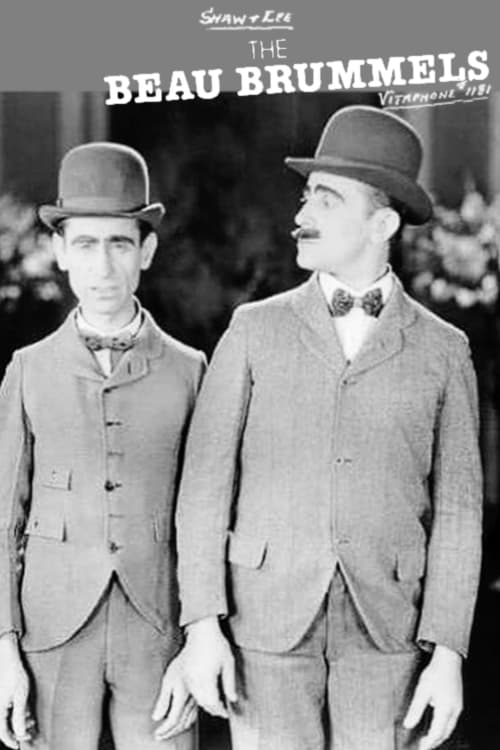
The Beau Brummels
1928
No user ratings available yet
Representation score: 1.3 out of 10

Representation Score
Minimal
1929
Director
Murray Roth
Runtime
8 minutes
Average Rating
No ratings yetNew Showbiz Analysis
Lambchops is a product of its time, functioning as a typical musical comedy centered around a comedic duo. The narrative relies on established clichés of the 1920s, focusing on interpersonal banter and musical performance rather than social commentary. The film lacks any visible evidence of overlapping aspects of identity or systemic critiques. The character dynamics, particularly between George and Gracie, lean into traditional gender roles of the era. Ultimately, the work adheres to the conventional social and narrative structures of 1929, offering little in the way of progressive representation or cultural subversion.
Category Breakdown
The film centers on a comedic duo performing traditional patter and musical numbers. There is no indication of non-straight or non-cisgender identities or critiques of the assumption that everyone is straight or cisgender.
Gracie tries to assert her intelligence against George's skepticism. However, this struggle is framed within a comedic cliché that reinforces traditional gender roles of the era.
The narrative provides no information about the racial or ethnic makeup of the cast. Given the era, the production likely reflects the homogeneity of the time.
Set in an elegant drawing room, the film emphasizes middle-to-upper-class aesthetics. It lacks any meaningful critique of religious or cultural systems.
The synopsis does not mention any characters with visible or invisible disabilities.
Present on Screen
Limited or Absent
Official Synopsis
George and Gracie enter an elegant drawing room, looking everywhere for something. Turns out, they're looking for the audience, and when George spots the camera, they start in on their patter. Gracie wants to convince George that she's smart, not dizzy - it's an uphill struggle of which she's blissfully unaware. Midway through, they break into song: "Do You Believe Me?" It includes a little bit of hoofing as the chatting continues. They end on a story Gracie whispers into George's ear.
1928
1929
1929
1935
1933
1941
1937
1930
No reviews yet. Be the first to share your thoughts on this movie!
Use the rating form above to leave a star rating and optional review.