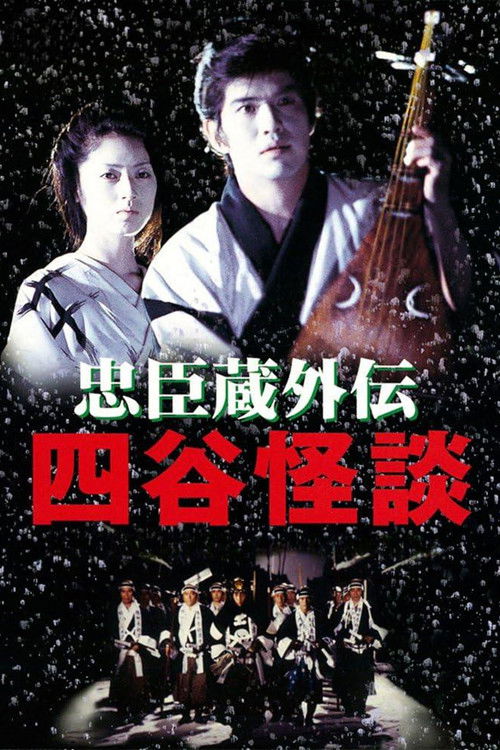
Crest of Betrayal
1994
No user ratings available yet
Representation score: 5.5 out of 10

Representation Score
Good
1971
Director
Toshio Matsumoto
Runtime
134 minutes
Average Rating
No ratings yetNew Showbiz Analysis
Toshio Matsumoto’s 'Demons' is a progressive work of the Japanese New Wave that prioritizes subjective experience over conventional storytelling. It dismantles established social hierarchies and explores non-traditional identities through an avant-garde lens. The film's strength lies in its refusal to conform to rigid sexual or gender roles, opting instead for a surrealist exploration of human impulses. This approach effectively challenges the traditional male-centric perspective common in period cinema. While the film excels in cultural and identity-based subversion, it remains firmly rooted in a specific Japanese historical context. It lacks multi-ethnic casting, focusing instead on internal psychological landscapes and localized aesthetic challenges.
Category Breakdown
The film challenges traditional assumptions about sexuality by presenting characters whose desires are not confined to rigid categories. It explores a world where desire is free from societal constraints and fixed identities.
The film breaks down traditional gender roles by focusing on the internal experiences of characters rather than their adherence to patriarchal norms. It emphasizes personal reality over external social constructs.
The film centers on the psychological journeys of a Japanese cast, challenging local beauty standards by highlighting unconventional, visceral bodies. It focuses on the internal rather than the external.
The narrative emphasizes individual moral truths over social conventions, portraying a society where institutional authority is questioned and social norms are broken down.
The film uses surreal imagery and unconventional physical expressions but does not clearly represent neurodivergence or physical disabilities.
Present on Screen
Limited or Absent
Official Synopsis
Gengobe Satsuma, an exiled samurai cast out as an Asano clan retainer, is given a second chance to join his brothers in arms to become the 48th Ronin against the Shogunate. His faithful servant gathers the 100 ryo required for his acceptance. Gengobe is also in love with a greedy geisha named Koman. About to be sold to another man, Gengobe learns that in order to keep her, her debt is exactly 100 ryo.
1994
1968
1976

1960
1949

1970
1959
1958
No reviews yet. Be the first to share your thoughts on this movie!
Use the rating form above to leave a star rating and optional review.