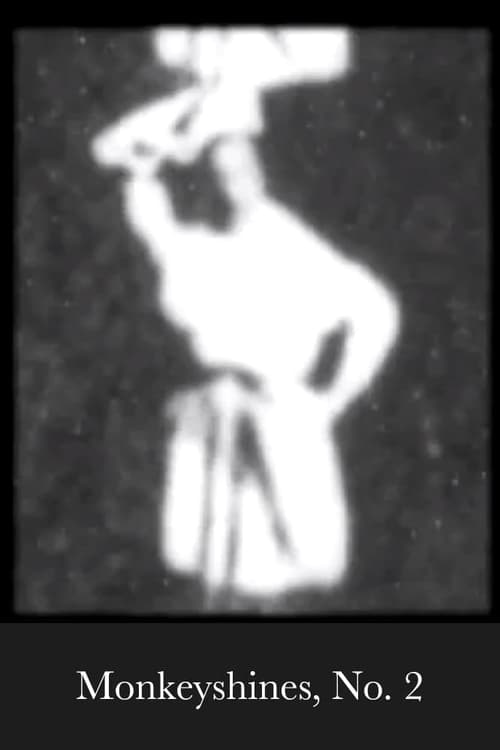
Monkeyshines, No. 2
1890
No user ratings available yet
Representation score: 0.9 out of 10
Representation Score
Minimal
1890
Director
William K.L. Dickson, William Heise
Runtime
1 minutes
Average Rating
No ratings yetNew Showbiz Analysis
Monkeyshines, No. 3 is an early example of cinematography, primarily showcasing technical experiments with motion. Its main goal was to study movement, limiting its ability to represent social issues. Reflecting the demographic and cultural norms of the 1890s Edison lab, the film doesn't engage with complex social identities or progressive values due to its lack of narrative structure. Ultimately, the film's lack of diversity stems from its historical context and its role as a scientific study rather than a narrative film.
Category Breakdown
There are no LGBTQ+ characters or narratives in the film. Given its focus on movement, it doesn't delve into identity-based stories.
The film features a single character performing technical tasks. It doesn't challenge gender roles or offer much narrative depth.
The film likely mirrors the demographics of a late 19th-century lab, showing no evidence of non-white or non-Anglo-Saxon actors.
The film celebrates Western technological progress. It doesn't address diverse cultural themes or critique Western institutions.
As a lost film focusing on motion studies, there is no information about the portrayal of physical or cognitive differences.
Present on Screen
Limited or Absent
Official Synopsis
Experimental film that follows up on the results of "Monkeyshines, No. 1" and "Monkeyshines, No. 2". Once again, an Edison company worker moves around in front of the motion picture camera. Lost film.
1890
1892

1907
1896
1896
1896

1897

1896
No reviews yet. Be the first to share your thoughts on this movie!
Use the rating form above to leave a star rating and optional review.