Within the Law
1939
No user ratings available yet
Representation score: 3.0 out of 10
Representation Score
Minimal
1933
PassedDirector
Spencer Gordon Bennet
Runtime
68 minutes
Average Rating
No ratings yetNew Showbiz Analysis
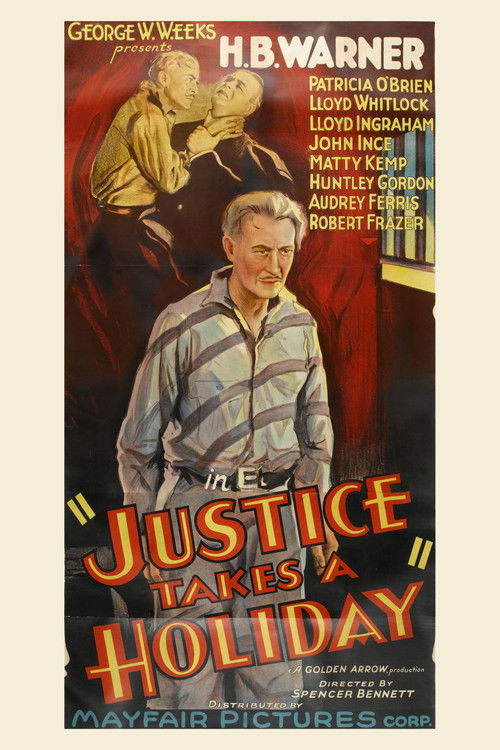
Justice Takes a Holiday is a traditional melodrama centered on vengeance and the corruption of legal authority. The plot revolves around a judge who abuses his position to adopt a convict's daughter, leading to cycles of imprisonment and revenge. While the film critiques the integrity of the judiciary, it does so within a conventional crime-drama framework. It relies on established power dynamics of the early 20th century without introducing diverse perspectives or non-traditional identities. Ultimately, the film operates as a morality play about institutional corruption. It lacks layered representation, focusing instead on a narrow conflict between male protagonists and a passive female character.
Category Breakdown
The film does not include any characters with non-straight sexual orientations or same-sex relationships. It follows traditional romantic and family structures typical of the 1930s.
A female character plays a crucial role in advancing the plot, but she remains a passive figure caught in a conflict between men. The narrative does not show any evidence of female empowerment or challenge to gender hierarchies.
The film likely adheres to the era's standard casting practices, featuring predominantly white actors. The story structure suggests a traditional approach to character demographics.
The story presents a critical view of Western institutions by showing a corrupt judge. It disrupts the idea of an infallible legal system through the lens of personal vendetta.
There is no indication of characters with visible or invisible disabilities. The film does not portray neurodivergence or physical impairments.
Present on Screen
Limited or Absent
Official Synopsis
After a judge sentences a man to prison, he uses his authority to adopt the mans's daughter then makes sure that the man will spend the rest of his life in prison. Outraged, the convict breaks out of prison to take his revenge on the judge.
1939

1937
1939

1948
1939

1941

1926

1935
No reviews yet. Be the first to share your thoughts on this movie!
Use the rating form above to leave a star rating and optional review.