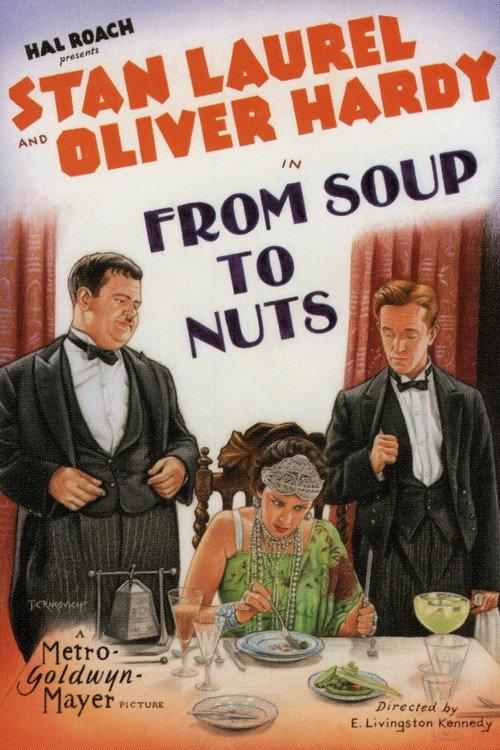
From Soup to Nuts
1928
No user ratings available yet
Representation score: 0.4 out of 10
Representation Score
Minimal
1935
ApprovedDirector
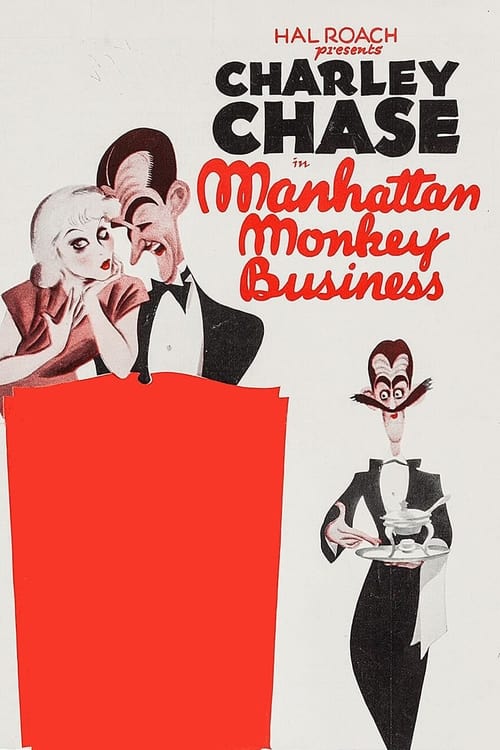
Charley Chase, Harold Law
Runtime
18 minutes
Average Rating
No ratings yetNew Showbiz Analysis
Manhattan Monkey Business is a product of its time, using a classic comedic setup where a protagonist's social status changes due to financial troubles. The narrative follows Charley's shift from being a restaurant patron to a waiter after failing to pay his bill. While the film offers situational humor, it does not intentionally represent various identities. The story relies on traditional social hierarchies and masculine struggles, lacking a systemic critique or diverse perspectives. Overall, the film serves as a typical comedy of the mid-1930s, emphasizing character-driven slapstick over disrupting conventional social or identity-based norms.
Category Breakdown
The film does not include any characters with LGBTQ+ identities or those who identify outside the cisgender norm. It seems to follow the traditional heterosexual norms of the 1930s.
The story revolves around a male protagonist dealing with economic difficulties. There is no indication of female empowerment or a challenge to traditional gender roles.
The film features a predominantly white cast and does not indicate any diversity in terms of race or ethnicity. It reflects the homogeneity of the time period.
The narrative operates within the social norms of the 1930s, focusing on individual economic struggles rather than critiquing religious or cultural institutions.
There is no mention of characters with physical or cognitive differences in the film.
Present on Screen
Limited or Absent
Official Synopsis
When Charley can't pay his bill at a restaurant, he is forced to become a waiter.
1928
1952
1936
1937
1934
1946
1939
1938
No reviews yet. Be the first to share your thoughts on this movie!
Use the rating form above to leave a star rating and optional review.