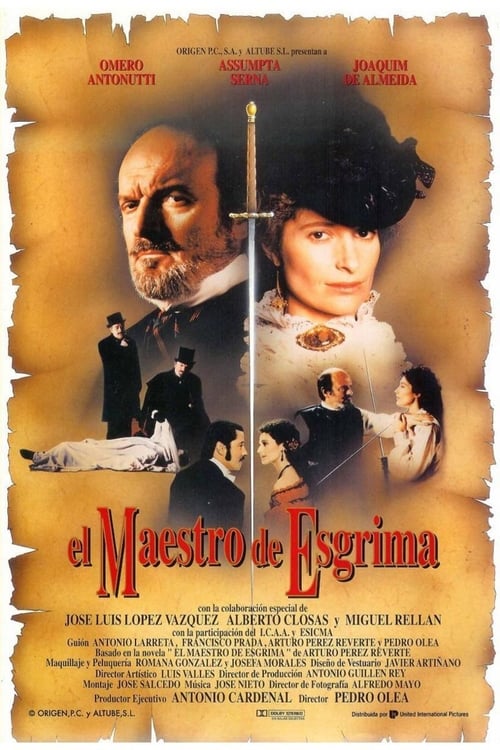
The Fencing Master
1992
No user ratings available yet
Representation score: 2.4 out of 10
Representation Score
Limited
1964
Director
Arturo Martínez
Runtime
90 minutes
Average Rating
No ratings yetNew Showbiz Analysis
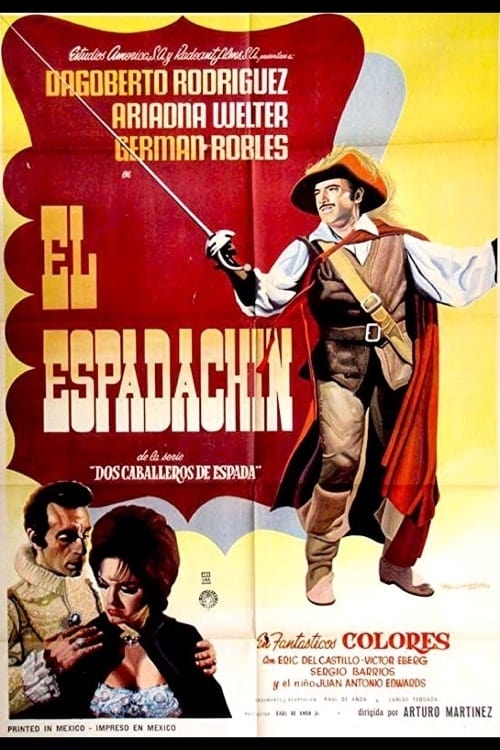
Dos caballeros de espada is a traditional adventure film that adheres to the genre conventions of the Golden Age of Mexican cinema. It prioritizes themes of heroism, honor, and established social hierarchies over the exploration of multiple aspects of identity. The film reinforces conventional social dynamics, particularly regarding gender and class. The protagonist drives the plot through masculine ability to act, while female characters occupy secondary, protective roles. The colonial setting provides a backdrop for a story focused on the Spanish immigrant experience. Ultimately, the work functions as a classic hero's journey. It seeks to restore social order and prove individual innocence rather than critiquing the broader power structures of 17th-century Mexico.
Category Breakdown
The film follows a traditional adventure structure centered on chivalry. There is no indication of non-traditional gender identities or narratives that question the assumption that everyone is straight or cisgender.
The narrative positions the male protagonist as the primary driver of action. Female characters are framed as passive recipients of protection, aligning with mid-20th-century cinematic clichés.
Set in colonial Mexico, the story focuses on a protagonist of Spanish descent. The film emphasizes the experiences of the colonial elite rather than showcasing a diverse range of backgrounds.
The film operates within a framework of traditional honor and justice. It follows a classic hero's journey that reinforces themes of individual merit and social order.
There are no visible or invisible disabilities mentioned or central to the character arcs.
Present on Screen
Limited or Absent
Official Synopsis
It's Mexico in the 1600's. Fifteen years after arriving from Spain, Pedro "Dagoberto Rodríguez" teaches his son Carlos "Rodolfo De Anda" his famous fencing moves. One day as he is going home, Carlos runs into some men who are trying to kidnap two young ladies. While defending them, Carlos kills one of the assistants to the viceroy and has to flee so he can later attempt to prove his innocence. He will have to use all his cunning and swordsmanship to survive the dangers he will face.
1992
1997
1947
1975
1959
1952
1966
1940
No reviews yet. Be the first to share your thoughts on this movie!
Use the rating form above to leave a star rating and optional review.