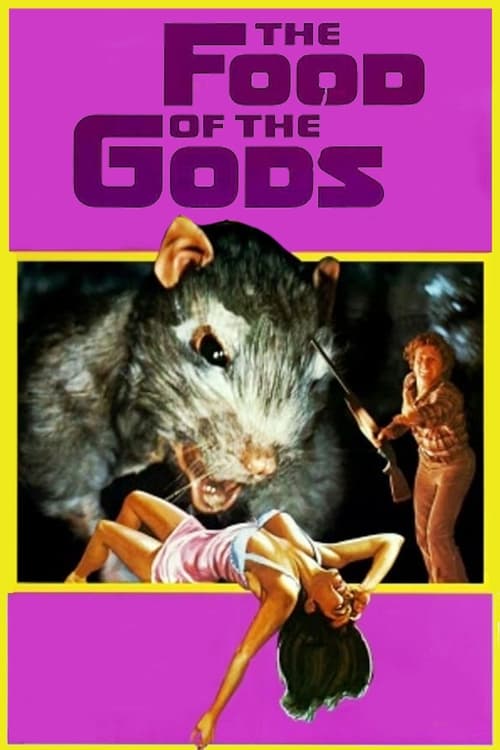
The Food of the Gods
1976
No user ratings available yet
Diversity score: 1.9 out of 10
1961
Director
John Lemont
Runtime
90 minutes
Average Rating
No ratings yetSynopsis
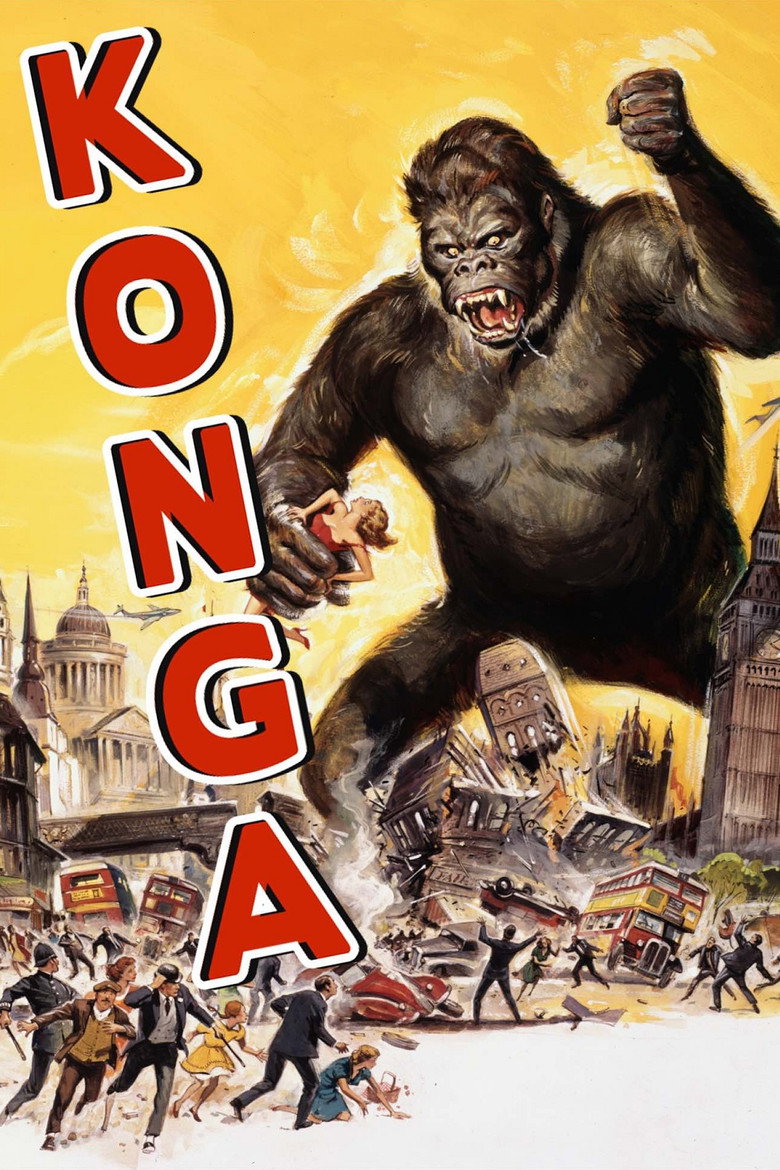
Dr.Decker comes back from Africa after a year, presumed dead. During that year, he came across a way of growing plants and animals to an enormous size. He brings back a baby chimpanzee to test out his theory. As he has many enemies at home, he decides to use his chimp, 'Konga' to 'get rid of them'. Then Konga grows to gigantic proportions and wreaks havoc all over the city of London!!
Overall Score
Minimal
Category Breakdown
LGBTQ+ Representation
The film contains no identifiable LGBTQ+ characters or narratives. The social framework remains strictly heteronormative, reflecting the cinematic standards of 1961.
Gender Representation
Male agency drives the entire plot, from scientific discovery to managing the creature. Female characters are relegated to secondary, reactive roles within a traditional hierarchy.
Racial & Ethnic Diversity
The narrative centers a white European cast using African landscapes as a mere backdrop. Indigenous populations lack agency, serving only as atmospheric elements within a colonialist framework.
Religious & Cultural Diversity
The story follows Western scientific exceptionalism and the pursuit of mastering nature. It lacks systemic critique, focusing instead on the binary morality of individual scientific hubris.
Disability Representation
There are no visible or invisible disabilities portrayed with nuance. Characters adhere to standard physical and mental health archetypes typical of the horror genre.
Strengths
Areas for Improvement
AI Analysis
Konga is a period-specific artifact that reinforces the social and racial hierarchies of the early 1960s. The film relies on the 'mad scientist' trope and the 'civilized explorer' archetype to drive its narrative. Rather than challenging established power dynamics, the film adheres to conventional depictions of authority and gender. It utilizes a colonialist framework where Western scientific dominance is the central catalyst for the plot's chaos. Ultimately, the film lacks intersectional complexity. It functions within a traditionalist structure that views non-Western territories through a lens of Western exceptionalism.
1976
1954
1959
1970

1954
1965
1964
1959

1957
1964
1957
1957
No reviews yet. Be the first to share your thoughts on this movie!
Use the rating form above to leave a star rating and optional review.