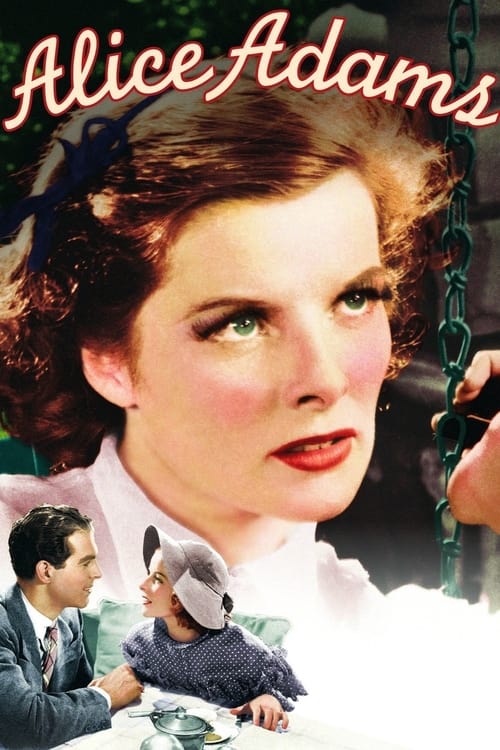
Alice Adams
1935
No user ratings available yet
Diversity score: 2.2 out of 10

1933
NRDirector
Mervyn LeRoy
Runtime
86 minutes
Average Rating
No ratings yetSynopsis
Tugboat, the Narcissus, is owned and captained by Annie Brennan, and among her crew are her alcoholic but good-natured husband, Terry, and her conscientious son, Alec. Annie continually loses business because of Terry's drunken mistakes. Alec wants to quit school to work on the tug full time, but Annie will not sacrifice her son's education. A grown Alec has followed in his mother's footsteps and becomes a mariner, but a more upscale one as the captain of a luxury liner. Alec returns home with his fiancée, Pat - the boss' daughter - with a grand plan to save Annie from the life that drunkard Terry has provided her. But ultimately, it's Annie and Terry that need to be Alec's savior, and by their move show him the meaning of true commitment.
Overall Score
Limited
Category Breakdown
LGBTQ+ Representation
The film adheres to the heteronormative standards of the early 1930s. There are no depictions of queer subtext or same-sex intimacy, as romantic arcs center strictly on traditional heterosexual pairings.
Gender Representation
Annie Brennan disrupts conventional expectations by serving as a professional tugboat captain. Her leadership in a male-dominated maritime environment subverts traditional hierarchies and challenges tropes of female fragility.
Racial & Ethnic Diversity
The ensemble is predominantly white, reflecting the demographic homogeneity of 1930s maritime cinema. The narrative lacks significant presence of racial minorities or intentional intersectional casting.
Religious & Cultural Diversity
The story focuses on working-class socioeconomic struggles and familial loyalty. It avoids singular religious morality, prioritizing personal resilience and professional survival within a localized community.
Disability Representation
There is no significant presence of characters with visible or invisible disabilities. The narrative fails to provide meaningful agency to neurodivergent or physically disabled individuals.
Strengths
Areas for Improvement
AI Analysis
Tugboat Annie stands out for its progressive handling of gender roles during a period when female characters were often secondary. By centering the plot on a woman’s professional mastery and authority, the film offers a sophisticated subversion of 1930s cinematic norms. However, the film remains a product of its time regarding other demographics. It lacks any meaningful representation of LGBTQ+ identities, racial diversity, or disability, focusing instead on a homogeneous working-class environment. Ultimately, while the protagonist's agency is a significant strength, the overall diversity is limited by the era's systemic lack of intersectional casting and varied social perspectives.
1935

1933

1931

1923

1931
1935

1938

1933
1929

1935

1938
1939
No reviews yet. Be the first to share your thoughts on this movie!
Use the rating form above to leave a star rating and optional review.