
I Married You for Fun
1967
No user ratings available yet
Representation score: 1.9 out of 10
Representation Score
Limited
1977
Director
Luciano Salce
Runtime
104 minutes
Average Rating
No ratings yetNew Showbiz Analysis
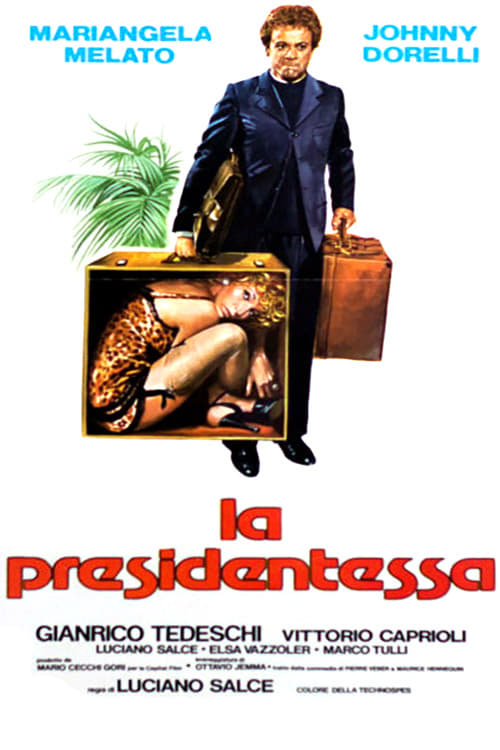
La Presidentessa serves as a satirical examination of provincial power, using comedy to explore the tension between traditional hierarchies and unconventional leadership. While it lacks ethnic and LGBTQ+ diversity, it offers a progressive perspective on gendered power dynamics. The film's strength lies in its portrayal of a female protagonist who challenges the male-dominated political order. It presents this order as ineffective and absurd when faced with unconventional leadership. However, the film remains limited by its era, featuring an ethnically uniform cast that reflects the demographics of 1970s Italy. It focuses on class and social status rather than broader diversity.
Category Breakdown
The film does not include any LGBTQ+ characters or non-straight relationships. The plot revolves around traditional heterosexual romances and courtship.
The narrative centers a female protagonist who rises to institutional power, disrupting the male-dominated political establishment and challenging the idea of female passivity.
The cast is ethnically uniform, reflecting the socio-historical context of 1970s provincial Italy. The story emphasizes class distinctions over racial or ethnic diversity.
The film uses satire to critique Western institutions and provincial bureaucracy. It portrays social norms and authority figures through a lens of comedic skepticism and absurdity.
There is no focus on physical or neurodivergent disabilities. No characters are used as plot devices related to disability.
Present on Screen
Limited or Absent
Official Synopsis
Gobette, a young avant-garde dancer, finds herself unemployed after the closure of the provincial club where she performs. By pure coincidence, Cipriano Gaudet, Minister of Justice, meets her at a judge's house and, convinced that she is the wife of the subordinate, gives promotions to the unsuspecting representative of the law in order to remove him from the woman and be able to get married with the soubrette. ..
1967
1975
1981

1980
1983
1990
1970
1982
No reviews yet. Be the first to share your thoughts on this movie!
Use the rating form above to leave a star rating and optional review.