
Tsunami: Caught on Camera
2009
No user ratings available yet
Representation score: 3.6 out of 10
Representation Score
Fair
2006
TV-PGDirector
Carl Strecker
Runtime
74 minutes
Average Rating
No ratings yetNew Showbiz Analysis
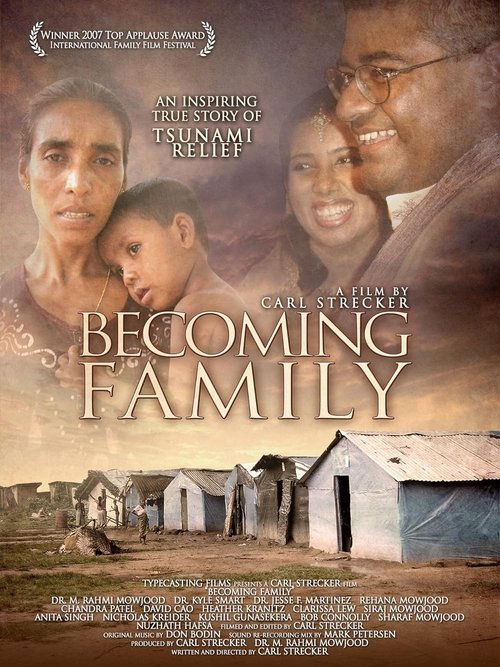
Becoming Family is a humanitarian documentary that excels in its portrayal of cross-cultural empathy and diverse identities. By centering a Muslim-American woman in a leadership role, the film successfully challenges conventional expectations of who leads in global crisis response. The film's primary strength lies in its ability to dismantle 'otherness' through shared humanitarian goals. It provides a meaningful look at how religious and cultural frameworks can drive community relief efforts. However, the film lacks representation in other key areas. There is no visible focus on LGBTQ+ identities or specific disability-focused narratives, which limits its overall scope of inclusivity.
Category Breakdown
The film does not include any explicit mention of LGBTQ+ characters or narratives. The story focuses on medical relief and family expansion within a specific cultural context.
Dr. M. Rahmi Mowjood is portrayed as a female leader in a high-level professional role. This challenges traditional gender roles during a humanitarian crisis.
The narrative features a Muslim-American protagonist of Sri Lankan descent. It highlights cross-cultural connections by blending Western medical expertise with local South Asian communities.
The film centers a Muslim-American narrative and prioritizes Islamic frameworks for community relief. It moves beyond Western-centric perspectives to emphasize human connection.
The documentary does not have specific character arcs related to neurodivergence or chronic illness. It is unclear if disability is explored through a lens of ability to act.
Present on Screen
Limited or Absent
Official Synopsis
Six months after a tsunami hit South Asia on December 26, 2004, Muslim-American and Sri Lankan-born Dr. M. Rahmi Mowjood led a team of American doctors and medical students on a relief trip. While mentoring medical students and aiding injured villagers, Dr. Mowjood also finds a way to ask someone to become a member of his own family.
2009

2016
2012
2004
2012

2011

2011
2013
No reviews yet. Be the first to share your thoughts on this movie!
Use the rating form above to leave a star rating and optional review.