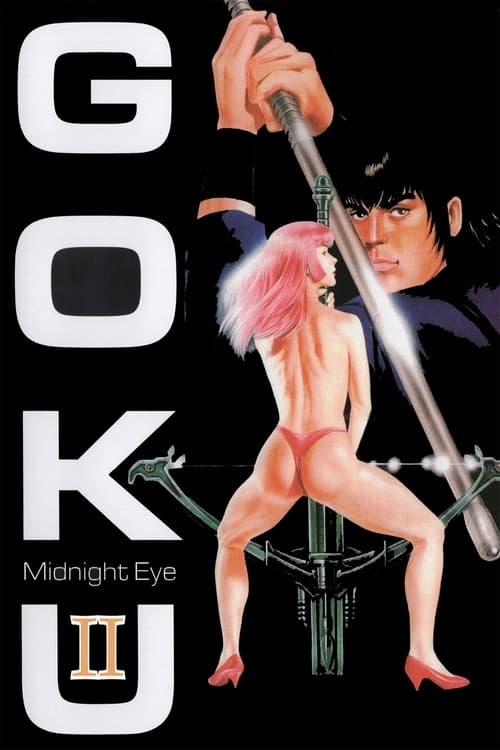
Goku: Midnight Eye
1989
No user ratings available yet
Representation score: 6.4 out of 10
Representation Score
Fair
1989
TV-MADirector
Yoshiaki Kawajiri
Runtime
53 minutes
Average Rating
No ratings yetNew Showbiz Analysis
Goku II: Midnight Eye is a gritty, genre-focused techno-thriller that prioritizes noir aesthetics over broad demographic representation. The film explores the theme of augmented individuals and the subversion of biological norms. While the narrative lacks explicit LGBTQ+ or diverse racial representation, it offers a compelling look at characters on the margins of society. The focus is on the tension between individual empowerment and corrupt institutional power. Ultimately, the film's strength lies in its deconstruction of authority and its use of technology to redefine physical capabilities.
Category Breakdown
The film focuses on a traditional noir relationship between Goku and Yoshiko. There are no explicit depictions of LGBTQ+ identities or relationships that assume everyone is straight.
Yoshiko starts in a vulnerable position needing protection. However, her involvement in a military conspiracy gives her a stronger role than typical damsel clichés.
The production keeps a fairly uniform cast of characters. The story emphasizes individual survival and cybernetic themes rather than racial or ethnic conflicts.
The story portrays institutions negatively by showing military experiments as chaotic. It favors individual ethics over organized societal structures.
Cybernetics and failed biological experiments drive the plot. Goku’s prosthetic eye becomes a tool for empowerment, while Ryu represents the tragic outcome of augmentation.
Present on Screen
Limited or Absent
Official Synopsis
Goku, the lone wolf private detective is back, contracted by Yoshiko, a mysterious, beautiful and very afraid woman, to find and save her brother, Ryu. Will Goku be able to protect Yoshiko from her step father's soldiers long enough to find her brother? Meanwhile Ryu, the unfortunate subject of a military experiment gone bad, leaves a trail of bodies behind him and has no intention of being found or saved by anyone. Will Goku have to kill the man he is supposed to save? Will even his omniscient cybernetic eye and sceptre be enough to help him defeat this indestructible killing machine?
No reviews yet. Be the first to share your thoughts on this movie!
Use the rating form above to leave a star rating and optional review.