Casting a Glance
2007
No user ratings available yet
Representation score: 0.6 out of 10
Representation Score
Fair
2015
Director
James Crump
Runtime
72 minutes
Average Rating
No ratings yetNew Showbiz Analysis
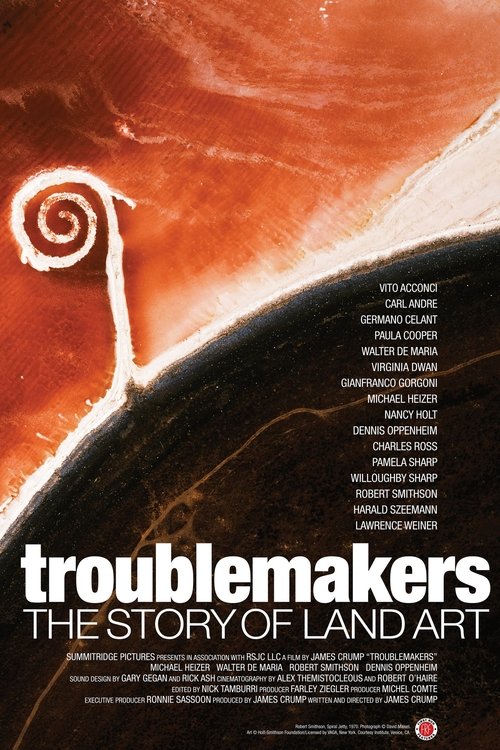
Troublemakers: The Story of Land Art serves as a specialized historical survey of a specific mid-20th-century movement. Its strength lies in its critique of capitalist art structures and celebration of anti-capitalist, site-specific creativity. However, the film reflects the demographic realities of its era, lacking representation of LGBTQ+ identities, people of color, and individuals with disabilities. Ultimately, the documentary prioritizes philosophical shifts in art history over identity-based representation, focusing on institutional disruption through scale rather than social diversity.
Category Breakdown
The film focuses on historical figures within the Land Art movement but does not center LGBTQ+ perspectives or identities.
The narrative reflects the male-dominated art scene of the 1960s and 70s. While Nancy Holt is included, the primary focus is on male artists.
The documentary centers on a predominantly white, Anglo-Saxon group of artists. It lacks significant platforms for artists of color or discussions about racial complexities.
The film highlights artists who rejected commodifiable objects in favor of decentralized, environmental, and site-specific experiences, critiquing capitalist art structures.
There is no focus on disability or neurodivergence. Subjects are presented solely through their professional artistic contributions and historical impact.
Present on Screen
Limited or Absent
Official Synopsis
The titular troublemakers are the New York–based Land (aka Earth) artists of the 1960s and 70s, who walked away from the reproducible and the commodifiable, migrated to the American Southwest, worked with earth and light and seemingly limitless space, and rethought the question of scale and the relationships between artist, landscape, and viewer. Director James Crump has meticulously constructed Troublemakers from interviews (with Germano Celant, Virginia Dwan, and others), photos and footage of Walter De Maria, Michael Heizer, Robert Smithson, Nancy Holt, and Charles Ross among others at work on their astonishing creations.
2007

2017

2018

2012
1977
2014
1974
2021
No reviews yet. Be the first to share your thoughts on this movie!
Use the rating form above to leave a star rating and optional review.