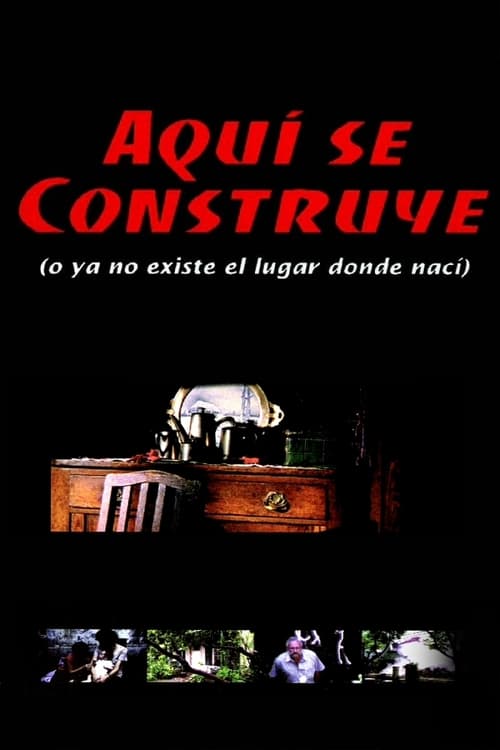
Under Construction (Or The Place Where I Was Born No Longer Exists)
2000
No user ratings available yet
Representation score: 5.2 out of 10
Representation Score
Good
2012
Director
Pedro Urano, Joana Traub Csekö
Runtime
78 minutes
Average Rating
No ratings yetNew Showbiz Analysis
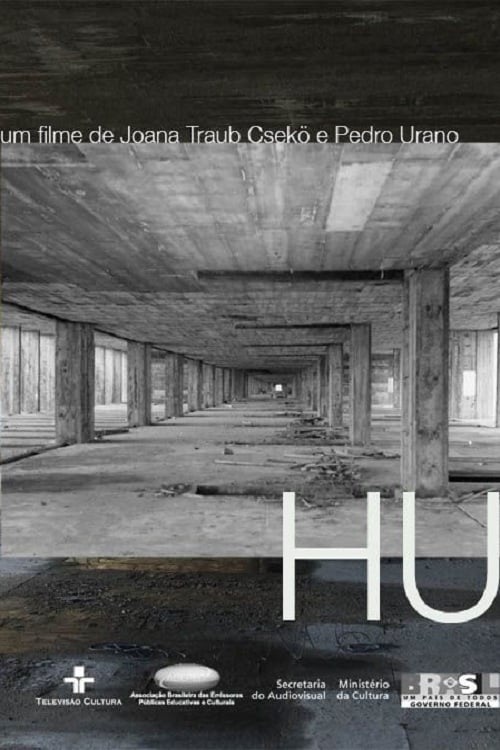
HU functions as a visual essay on the tension between modernist ideals and institutional decay. It uses the University Hospital of UFRJ as a metaphor for the Brazilian public sphere, prioritizing architectural symbolism over traditional character-driven storytelling. The film's strength lies in its cultural and systemic critique. It effectively deconstructs the relationship between built environments and state efficacy, offering a profound look at the political maze of Brazil. However, the lack of interpersonal character dynamics limits its performance in identity-specific categories. Because the narrative focuses on space and history rather than individuals, it misses opportunities to represent specific LGBTQ+, gendered, or disabled lived experiences.
Category Breakdown
The documentary focuses on architectural metaphor and public health infrastructure. There are no specific LGBTQ+ character arcs or identity-based narratives present.
The film lacks specific gendered character studies. It engages implicitly with sectors like public health, which are influenced by gendered labor and social policy.
By centering on a major Brazilian institution, the film engages with Rio de Janeiro's diverse demographics. It addresses the post-colonial realities of Brazil's development.
The work offers a high degree of systemic critique. It frames modernist utopias as transitioning into dystopias, analyzing the failures of the state and political mazes.
The hospital setting inherently involves illness and physical vulnerability. The film treats these spaces with gravity, focusing on the structural capacity to support human needs.
Present on Screen
Limited or Absent
Official Synopsis
A symmetrically divided building: on one side, an important public hospital, on the other, a bewildering ruin. On the horizon, Rio de Janeiro, public health, education and Brazil’s aged modern project. Shot entirely in the monumental and only partially occupied modernist edifice of the University Hospital of UFRJ. A material metaphor of the Brazilian public sphere and its political maze. A synthesis architecturally expressed of the modernist utopia/dystopia.
2000

2002

1968
2019

2015

2011

2023
![Movie poster for Bickels [Socialism]](https://image.tmdb.org/t/p/w500/7l3LMzod0pJoDIlOlyne1jwOGYW.jpg)
2016
No reviews yet. Be the first to share your thoughts on this movie!
Use the rating form above to leave a star rating and optional review.