
In Nowhere Land
2002
No user ratings available yet
Representation score: 5.5 out of 10
Representation Score
Fair
1991
Director
Zrinko Ogresta
Runtime
97 minutes
Average Rating
No ratings yetNew Showbiz Analysis
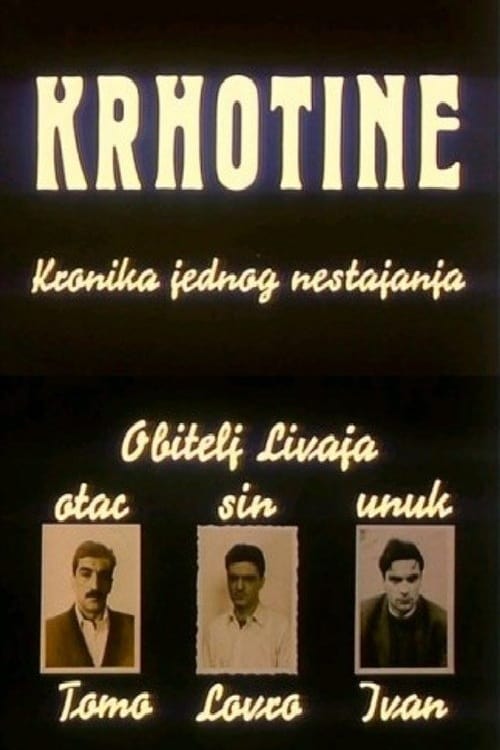
Chronicle of a Vanishing is a historical exploration that prioritizes the personal truths of individuals impacted by political oppression. It excels in critiquing institutional narratives and examining the moral complexities of political regimes. However, the film lacks breadth in contemporary demographic metrics. There is no visible LGBTQ+ representation or multi-ethnic casting, and limited documentation regarding the portrayal of disabilities.
Category Breakdown
The film does not include any explicit LGBTQ+ characters or identities that challenge heterosexuality. The story focuses on familial ties and political persecution.
The story revolves around a male-driven quest for truth involving a grandson and his father. Women play roles navigating the domestic consequences of state violence, but specific gender power dynamics are not explored.
The cast is likely homogeneous within its regional context. Diversity is shown through the examination of internal ethnic and political divisions used by the state.
The film critiques systemic oppression by focusing on a family labeled as traitors. It questions the accuracy of state-sanctioned historical records and explores the moral ambiguity of political regimes.
There is no information about the portrayal of physical or neurodivergent disabilities in this work.
Present on Screen
Limited or Absent
Official Synopsis
In the midst of the rising political tensions of the former Yugoslavia, a young man stumbles across evidence that might prove that his grandfather, who had been labled as an enemy of the state and sentenced to a prison camp, was actually been innocent all along.
2002

1985

1957

2021

2014

1977
1989

1992
No reviews yet. Be the first to share your thoughts on this movie!
Use the rating form above to leave a star rating and optional review.