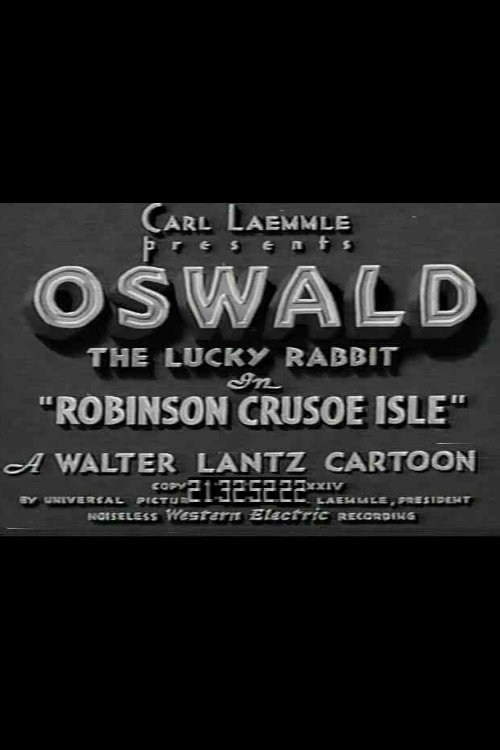
Robinson Crusoe Isle
1935
No user ratings available yet
Representation score: 1.4 out of 10
Representation Score
Minimal
1934
ApprovedDirector
Walter Lantz, Tex Avery
Runtime
8 minutes
Average Rating
No ratings yetNew Showbiz Analysis
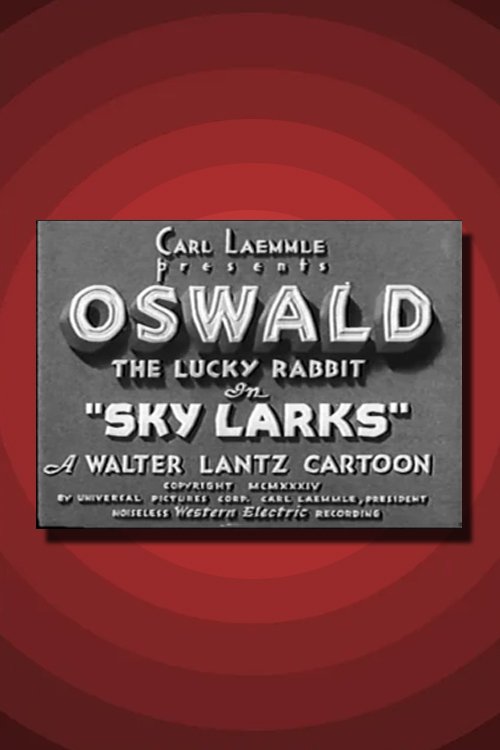
Sky Larks opens with Oswald the Rabbit watching a documentary about balloonist Auguste Piccard, a mundane frame that quickly dissolves into a fever dream of interplanetary absurdity. The film’s argument is not social but kinetic: it sells the pleasure of physical impossibility, where a rabbit and a beagle are flung through a Milky Way made of milk bottles and crash onto a Mars that is less a planet than a junkyard of war. The camera loves the chaos, favoring the agility of the rabbit and the bumbling passivity of the dog, yet neither character holds moral weight. The "Mars" sequence, with its giant sipping nitro soup and animate gas masks dancing, treats violence as a surreal texture rather than a political statement; the weapons are props, not symbols. The film’s internal logic is consistent in its refusal to ground itself in human reality. The "sold meaning" is pure escapism: the status quo of the cartoon world is inviolable, and harm is always temporary, resetting with the next gag. There is no hierarchy to challenge or affirm because the characters exist outside the social contract. The ending, where the pair wakes in an empty cinema and flees in panic, reinforces this: the adventure was a dream, a brief deviation from the static reality of the theater. The last image is not a moral verdict but a return to the void, leaving the audience with the sensation of a joke that has no punchline, only the echo of the punch. In the context of 1934 animation, Sky Larks is a product of its era’s visual vocabulary, where the body is a tool for humor and the world is a playground for physics. It does not seek to represent identity, critique power, or affirm tradition; it simply exists as a burst of kinetic energy. The film’s "diversity" is limited to the variety of anthropomorphic shapes, a formal diversity that serves the comedy rather than the message. The camera’s affection is for the gag itself, not for any character’s journey or any social truth. It is a film that asks nothing of the viewer except to laugh at the absurdity of a rabbit being shot out of a cannon, a moment of pure, unburdened whimsy that resists interpretation.
Category Breakdown
No same-sex intimacy or identity markers appear. The rabbit and dog share only physical gags, lacking romantic subtext or domestic roles.
Oswald and Dopey are gender-neutral caricatures without partners or authority structures. The film contains no competence hierarchies or gendered dynamics.
The cast consists of anthropomorphic animals with no human racial coding or ethnic markers. Diversity is not a visual or thematic element.
The Mars sequence uses war imagery as surreal, non-political background. No nation, faith, or class hierarchy is affirmed or critiqued.
No characters display physical impairments or chronic conditions. Malleable cartoon bodies serve slapstick elasticity rather than identity representation.
Present on Screen
Limited or Absent
Official Synopsis
Oswald the Rabbit and his friend travel up to Mars where they meet the Roman god of war and a variety of anthropomorphic weapons.
1935
1934
1933
1935
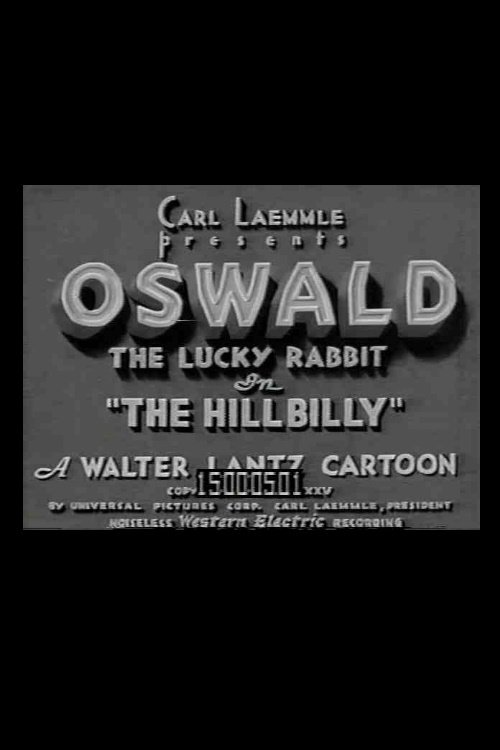
1935
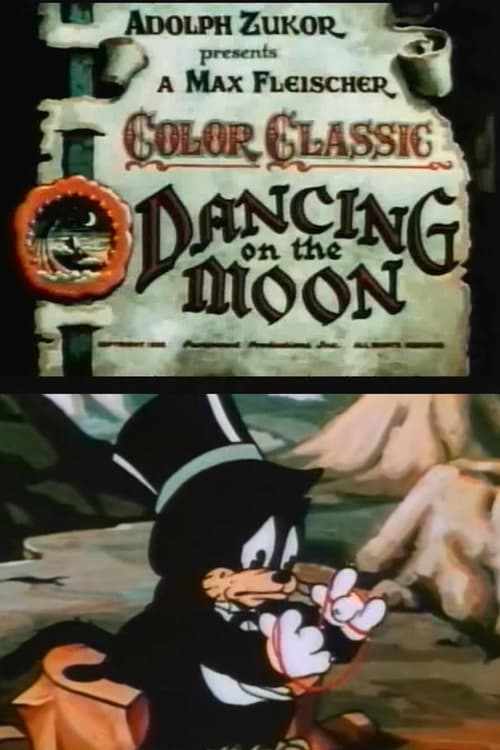
1935
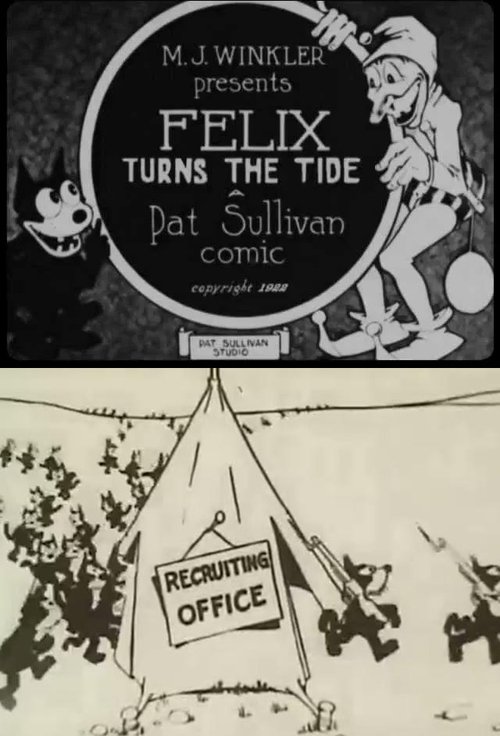
1922
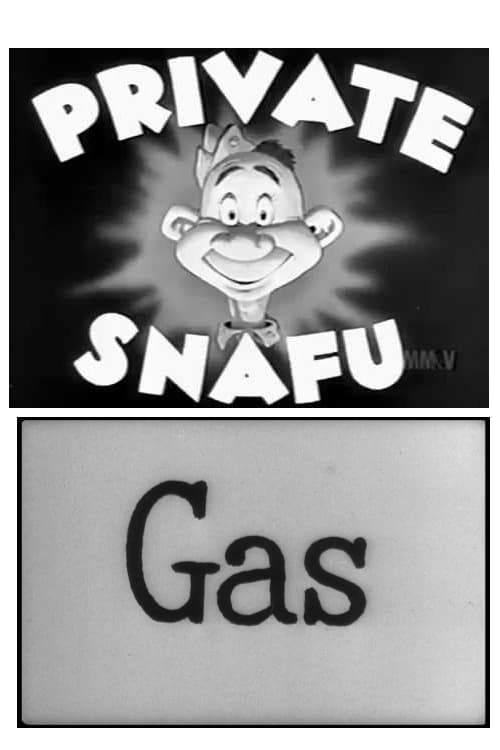
1944
No reviews yet. Be the first to share your thoughts on this movie!
Use the rating form above to leave a star rating and optional review.