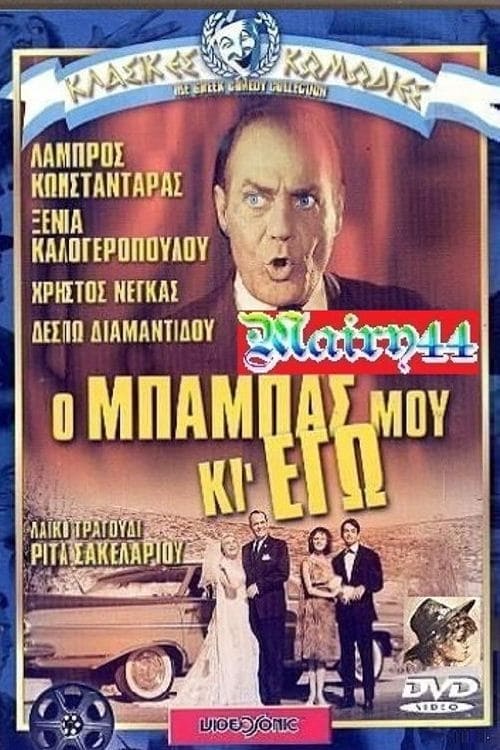
my father and i
1963
No user ratings available yet
Representation score: 1.3 out of 10

Representation Score
Minimal
1966
Director
Dinos Dimopoulos
Runtime
103 minutes
Average Rating
No ratings yetNew Showbiz Analysis
Jenny Jenny is a mid-century social comedy that examines the tension between political ambition and personal relationships. The narrative structure emphasizes traditional power dynamics, where male figures like Kosmas Skoutaris and Miltos Kassandris hold the majority of influence. While the film offers a critical look at the manipulation of familial ties by political and financial interests, it does so through a lens that upholds conventional social hierarchies. The use of a forced marriage as leverage underscores the reinforcement of existing power structures rather than individual freedom. Ultimately, the work serves as a historical reflection of 1960s Mediterranean social dynamics. It highlights class and political distinctions within a domestic context, while prioritizing traditional representation over progressive narratives.
Category Breakdown
The film adheres to traditional heterosexual relationships and does not include any characters with non-traditional gender identities or critiques of conventional marriage.
Jenny is portrayed as a supporting character who facilitates the male protagonists' political goals. The storyline relies on mid-century clichés where women play roles subservient to male ambitions.
The story unfolds in a homogeneous social setting typical of 1960s Greek cinema. There is no indication of diverse ethnic perspectives or multi-layered casting.
The plot critiques the interplay between family, wealth, and political power but remains grounded in conventional social values and the maintenance of status.
There is no mention of characters dealing with physical, sensory, or neurodivergent conditions.
Present on Screen
Limited or Absent
Official Synopsis
Jenny Skoutari, a student and the daughter of a party local commander Kosmas Skoutaris, gets use to visit the private library of - her father's political rival - the shipowner Miltos Kassandris. Kassandris prepares his nephew - and a childhood friend of Jenny - Nikos Mantas, as a candidate for the next election. Mantas' rival has a lead, and is backed by Skoutaris, who is facing financial problems. So Kassandris decides to force Jenny to marry his nephew with a fake marriage, while at the same time financially breaks down her father in order to secure the election of his nephew. This marriage, however, will lead to unexpected situations between the couple..
1963

1969

1975

1961
1944

1975

1960

1963
No reviews yet. Be the first to share your thoughts on this movie!
Use the rating form above to leave a star rating and optional review.