Raw! Raw! Rooster!
1956
No user ratings available yet
Representation score: 1.3 out of 10
Representation Score
Good
1974
NC-17Director
Charles Swenson
Runtime
70 minutes
Average Rating
No ratings yetNew Showbiz Analysis
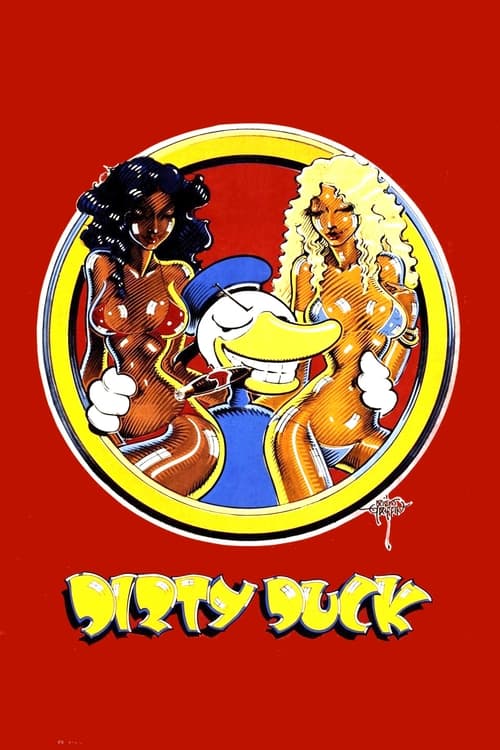
Down and Dirty Duck opens with a grainy, black-and-white texture that mimics found footage, grounding its surreal narrative in a gritty, urban reality. The film’s argument is a rejection of suburban conformity and corporate blandness, treating the insurance office and police as oppressive structures. Willard, a mild-mannered insurance adjuster, is the vessel for this critique, his incompetence and sexual confusion serving as a running gag that mocks traditional masculinity. The camera likes Willard, lingering on his confused face with sympathetic curiosity, while the duck, voiced by Mark Volman, acts as an agent of chaos and sexual ambiguity. The film’s internal logic pulls apart: it satirizes urban alienation but does not mock its characters, treating their confusion as a normal, even admirable, response to a drab world. The ending, where Willard quits his job and leaves with the duck, is the moral verdict: a rejection of societal norms in favor of a surreal, anti-establishment freedom. The last image is a static, ambiguous tableau that rewards the viewer’s patience with nonsensical logic, affirming that the city is a psychological space where identity is fluid and unstable.
Category Breakdown
Queer identities appear in credits and the desert sequence, including a lesbian couple. Willard’s confusion with the duck normalizes non-heteronormative desire within the surreal narrative.
Willard’s passivity drives the plot, while female figures like the Boss Lady hold authority. The film mocks traditional masculinity but treats female power as a chaotic, sexualized force.
Minor roles for a Mexican Official and Negro Gentleman exist but remain background texture. The primary narrative focuses on white characters, treating race as a stereotyped element.
The film attacks corporate conformity and institutional authority, portraying the insurance office and police as oppressive. The ending rejects societal norms in favor of a surreal, anti-establishment resolution.
No characters are depicted with physical or mental disabilities. The narrative focuses on sexual and social confusion, leaving the axis of impairment unexplored.
Present on Screen
Limited or Absent
Official Synopsis
Willard, a mild mannered insurance adjuster, teams up with a foul-mouthed fowl who takes Willard on a surreal quest to become less uptight - and possibly get laid in the process.
1956
1955
1968
1994
1957
1980
1952
1968
No reviews yet. Be the first to share your thoughts on this movie!
Use the rating form above to leave a star rating and optional review.