
Gertrudis
1992
No user ratings available yet
Representation score: 6.8 out of 10
Representation Score
Limited
1934
Director
Miguel Contreras Torres, Raphael J. Sevilla
Runtime
98 minutes
Average Rating
No ratings yetNew Showbiz Analysis
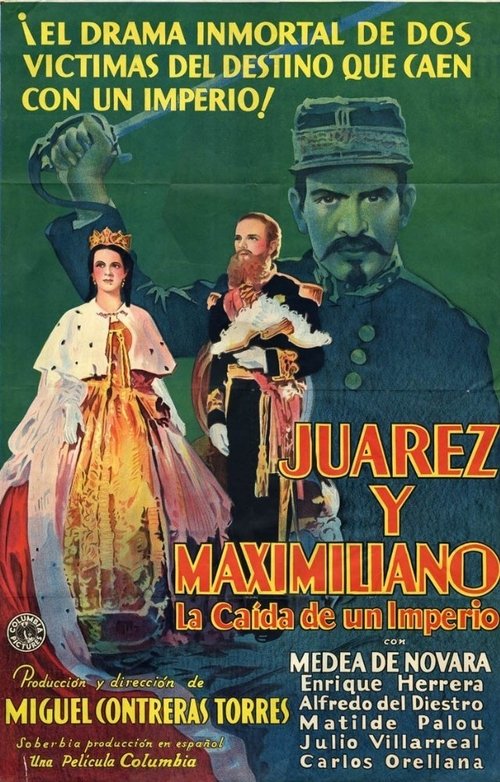
Juárez y Maximiliano (1934) reconstructs the struggle for Mexican sovereignty. Its primary strength lies in its subversion of Eurocentric perspectives by centering Benito Juárez, a leader of Zapotec heritage, against European imperial intervention. While the film highlights ethnic ability to act, it remains constrained by the social hierarchies of its time. Female characters like Empress Carlota are prominent, yet their roles are largely tied to the imperial structure rather than independent ability to act. The production lacks modern, multi-layered approaches, focusing instead on the traditional clash between republicanism and monarchy. It serves as a critique of Western colonial imposition through a Latin American historical lens.
Category Breakdown
The film focuses on historical geopolitical conflicts and dynastic structures. There is no indication of LGBTQ+ identities or non-traditional gender narratives.
Empress Carlota plays a central role in the political drama. However, her ability to act seems limited to imperial or domestic duties within a masculine-coded war narrative.
The story centers on Mexican sovereignty and the Zapotec heritage of Benito Juárez. By positioning a non-European leader as the main character, it challenges Eurocentric perspectives.
The narrative critiques foreign intervention and the imposition of European monarchical structures. It frames the fall of an empire as a challenge to Western imperialism.
There is no documented evidence regarding the portrayal of physical or neurodivergent characters in this production.
Present on Screen
Limited or Absent
Official Synopsis
The story of Mexican President Benito Juárez and the emperor Maximilian of Habsburg and the empress Carlota.
1992

1952

1939

1974
1939
1966
1954
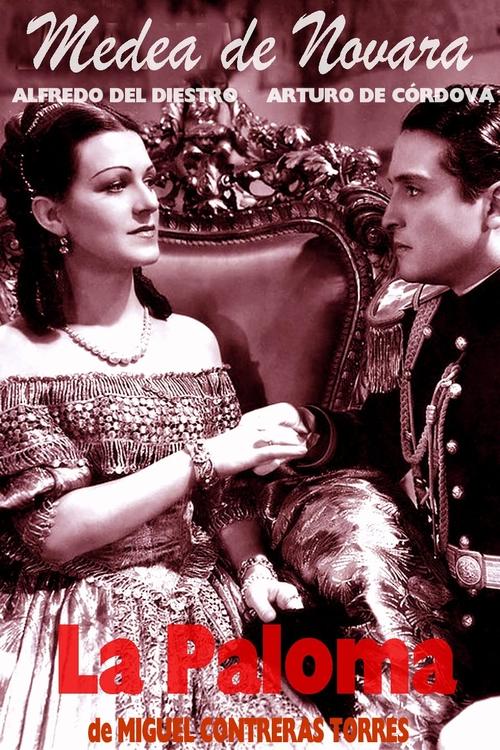
1937
No reviews yet. Be the first to share your thoughts on this movie!
Use the rating form above to leave a star rating and optional review.